

Key Takeaway: The C7 Corvette (2014–2019) Mastery
The seventh-generation (C7) Corvette represents the definitive apex of the front-engine, rear-wheel-drive layout in Chevrolet’s 60-year history. This generation transitioned to a standard all-aluminum frame, providing a structure 57% stiffer and 99 lbs lighter than the previous steel architecture.
Key innovations include the Performance Data Recorder (PDR), 7-speed manual with Active Rev Matching, and a diverse Gen V small-block V8 lineup ranging from the 455-hp LT1 to the 755-hp supercharged LT5.
Strategic Buying Intelligence:
- The “Sweet Spot”: The 2017–2019 Grand Sport (2LT/Z51) is the primary recommendation for balancing wide-body aesthetics with naturally aspirated reliability.
- Critical 2026 Maintenance: High-priority inspections must include wide-body wheel cracking (Grand Sport/Z06), the 8-speed automatic “shudder” (addressed by TSB 18-NA-355), and 3LT dashboard delamination.
- Thermal Management: Early Z06 models (2015–2016) are prone to “heat soak” during track use; 2017+ models feature superior secondary cooling.
With 180,000 units produced, the C7 remains a stable market asset, serving as the high-performance bookend to the traditional Corvette era before the mid-engine C8 shift.

The Spectacular, Aggressive Climax
For any serious enthusiast, the seventh-generation Corvette, or C7, represents much more than a new model cycle; it marks the spectacular, aggressive climax of the front-engine sports car layout that defined Chevrolet for over six decades.
When it debuted in 2014, the C7 Stingray immediately dropped the smooth, evolutionary lines of its predecessors in favor of sharp, angular, European-inspired styling, announcing a revolutionary intent. It was the first time since 1976 that the legendary Stingray nameplate returned, symbolizing a clean-sheet approach to the car’s engineering.
This generation was a powerhouse of firsts for the Corvette: featuring an all-aluminum frame across every model, standard Active Rev Matching on the manual transmission, and the groundbreaking Performance Data Recorder (PDR).
While the C7 was the most refined and technologically advanced front-engine Vette ever built, it faced a unique challenge: the public knew GM was secretly developing the radical mid-engine C8. This looming threat forced the C7 to prove itself, leading to a relentless pursuit of speed that culminated in the monstrous, 755-horsepower ZR1.
The C7 didn’t just fade away; it went out in a blinding flash of supercharged glory, securing its legacy as the fastest, most capable front-engine American sports car ever conceived.

C7 Vitals: Performance at a Glance
The C7 launched with incredible capability and saw performance skyrocket throughout its run, setting new benchmarks for the entire brand.
| Feature | Details |
| Production Years | 2014–2019 |
| Total Production | ≈180,000 units |
| Key Engines | LT1 (455-460 hp), LT4 (650 hp), LT5 (755 hp) |
| Chassis | All-Aluminum Frame (Standard across all models) |
| Key Innovation | Standard Independent Rear Suspension (IRS), Magnetic Ride Control (MRC), Active Rev Matching (Manual), Performance Data Recorder (PDR) |
| Legacy | The last front-engine Corvette; highest horsepower output for a front-engine GM production car (ZR1). |

Table of Contents
- Introduction: The Final Front-Engine Era
- C7 Vitals: Performance at a Glance
- The Technology Revolution: PDR, Aluminum, and Chassis
- C7 Engine Evolution: LT1, LT4, and the 755 HP LT5
- Model Hierarchy: Stingray, Grand Sport, Z06, and ZR1
- C7 Buyer’s Guide: Market Value & The “Sweet Spot”
- Common C7 Reliability & Mechanical Issues
- The C7.R: Racing Dominance and Track Data
- Popular C7 Aftermarket & Tuning Upgrades
- The Ultimate C7 Pre-Purchase Checklist
- C7 Corvette Q&A: Your Top Questions, Answered
- Conclusion: The Enduring Legacy
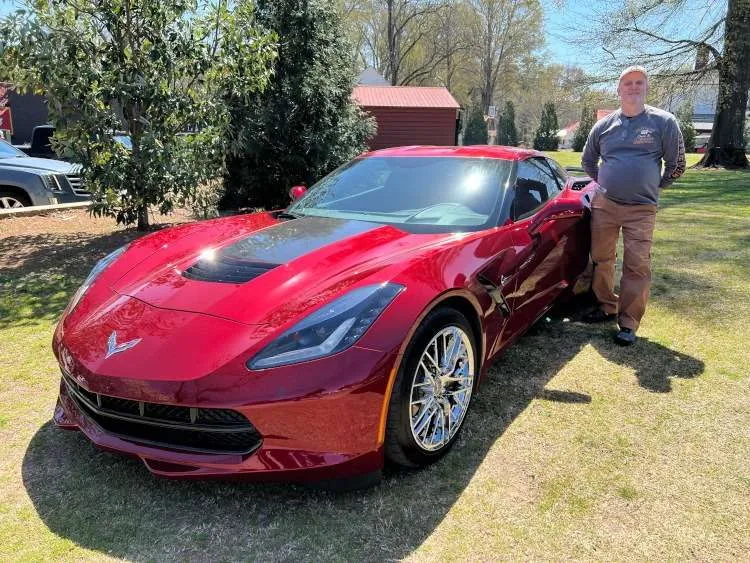
3. The Technology Revolution: PDR, Aluminum, and Chassis
The C7 Corvette didn’t just look new; it was an engineering revolution built from the ground up to address every handling and weight criticism leveled at the previous C6 generation. Chevrolet didn’t just update the chassis; they designed an entirely new structure utilizing cutting-edge materials and embedded technology, giving the C7 world-class rigidity and track capability right out of the box.
The All-Aluminum Foundation
The single most important structural update for the C7 was the all-aluminum frame (Source: GM Engineering). Unlike the C6, where the aluminum frame was reserved for the Z06 and ZR1, the C7 featured this advanced frame as standard equipment on every model, including the base Stingray.
- Rigidity: The new aluminum structure was 57% stiffer and 99 pounds lighter than the steel frame of the C6 (Source: GM Specs), drastically improving handling, steering response, and crash protection.
- Manufacturing: The frame utilizes advanced manufacturing techniques, including hydroforming and laser welding, ensuring high precision and strength.
Embedded Technology
The C7 introduced technology that truly bridged the gap between a pure sports car and a modern supercar.
- Magnetic Ride Control (MRC): This became a hallmark of the C7, offered on most models. MRC uses magnetorheological fluid in the shock absorbers, allowing the suspension damping to be adjusted 1,000 times per second (Source: GM Specs). This provides both incredible ride comfort and fierce track stiffness in an instant.
- Performance Data Recorder (PDR): Developed in conjunction with Cosworth, the PDR was revolutionary. It allowed owners to record high-definition video of their drives, overlaying detailed performance data such as speed, G-force, boost pressure, and lap times (Source: Chevrolet Marketing). This tool transformed the Corvette into a mobile, self-coaching track machine.
- Active Rev Matching: Standard on all 7-speed manual transmissions, this feature electronically “blips” the throttle during downshifts, perfectly matching the engine speed to the wheel speed (Source: GM Engineering). This allowed even amateur drivers to execute perfectly smooth, heel-and-toe-style downshifts.

4. C7 Engine Evolution: LT1, LT4, and the 755 HP LT5
The heart of the C7 generation was the all-new Gen V Small-Block V8 architecture, which introduced direct fuel injection to the Corvette platform for the first time. The C7’s engine lineup followed a simple, brutal progression: naturally aspirated, supercharged, and then ultimately, the track-destroying, ultimate supercharged version.
The Base Powerhouse: LT1 V8
The base Corvette Stingray debuted with the new 6.2L LT1 V8 engine. While maintaining the classic 6.2L displacement, the LT1 was an entirely clean-sheet design that moved the Corvette firmly into the 21st century.
- Power Output: 455 horsepower and 460 lb-ft of torque (boosted to 460 hp with the optional performance exhaust) (Source: GM Specs).
- Key Technology: The LT1 featured Direct Fuel Injection (DI), Active Fuel Management (AFM) (cylinder deactivation), and Variable Valve Timing (VVT). These systems greatly improved both power output and EPA efficiency (Source: GM Specs).
Supercharged Dominance: LT4 V8 (Z06)
Introduced in 2015, the 6.2L LT4 V8 engine defined the Z06 as a supercar killer. The LT4 was essentially a supercharged version of the LT1, but required significant engineering upgrades to handle the forced induction heat and pressure.
- Power Output: 650 horsepower and 650 lb-ft of torque (Source: GM Specs).
- Thermal Management: The LT4 utilized a massive 1.7-liter Eaton R1740 TVS supercharger and a complex cooling system. However, as noted by enthusiasts, this system was prone to heat soak during prolonged, aggressive track use in early 2015–2016 Z06 models, a flaw GM worked to address in later years (Source: Track Reports).
The Final Beast: LT5 V8 (ZR1)
The C7’s engine story concluded with the spectacular LT5 V8 in the 2019 ZR1. This engine was a masterclass in high-output forced induction, built specifically to overcome the LT4’s limitations and set a new standard for American performance.
- Power Output: 755 horsepower and 715 lb-ft of torque (Source: GM Specs).
- Dual-Fuel System: The LT5 introduced GM’s first dual-injection system, utilizing both direct injection and port injection to ensure adequate fuel delivery and cooling at extreme power levels (Source: GM Engineering).
- Extreme Cooling: To combat heat soak, the LT5 required an unprecedented 13 heat exchangers/radiators, dramatically increasing the ZR1’s nose volume and requiring the unique “halo” hood design (Source: GM Engineering).

5. Model Hierarchy: Stingray, Grand Sport, Z06, and ZR1
The C7 lineup offered four distinct performance packages, creating a perfectly escalating hierarchy of power, aerodynamics, and track capability. While the “LT” trims (1LT, 2LT, 3LT) referred to interior luxury levels, the actual model designation determined the performance hardware and body style.
The Four Pillars of Performance
| Model | Engine | Body Style | Core Focus | Key Feature |
| Stingray (Base/Z51) | LT1 (455–460 hp) | Narrow Body | Daily Driver / GT | Standard aluminum chassis; high fuel efficiency. |
| Grand Sport (GS) | LT1 (460 hp) | Wide Body | Handling / Cornering | Z06 wide-body chassis, massive track brakes, naturally aspirated engine. |
| Z06 | LT4 Supercharged (650 hp) | Wide Body | Supercar Killer | E-LSD, Magnetic Ride Control, aggressive aero package. |
| ZR1 | LT5 Supercharged (755 hp) | Wide Body | Ultimate Track Weapon | Dual-injection engine, 13 radiators, massive carbon fiber high-wing option. |
Stingray: The Reborn Icon
The base C7 was reborn as the Stingray, offering astonishing performance right out of the box.
- Z51 Package: This was the most popular performance option, transforming the Stingray into a potent track car. It added the dry-sump oil system, performance brakes, an electronic limited-slip differential (E-LSD), and the performance exhaust, boosting power to 460 hp (Source: Wallace Chevrolet).
- The Sweet Spot: The Stingray with the 2LT and Z51 package is often considered the perfect blend of daily drivability, necessary technology (Heads-Up Display, heated/cooled seats), and track capability (Source: Hagerty Media).
Grand Sport: The Handling King (2017-2019)
The Grand Sport, reintroduced in 2017, became the choice of driving purists who valued balance over brutal power.
- Engineering Synthesis: The GS ingeniously combined the Z06 wide-body chassis (including Z06 fenders, wheels, and track-ready suspension components) with the reliable, naturally aspirated 460 hp LT1 engine (Source: GM Specs).
- Track Focus: It came standard with the Z06’s massive Brembo brake system and Magnetic Ride Control, making it a spectacular cornering machine capable of achieving over 1.1g lateral acceleration with the Z07 package (Source: HotCars).
Z06 & ZR1: The Forced Induction Extremes
The Z06 and the final ZR1 showcased the ultimate power potential of the C7 platform.
- The Z06 (650 hp) was the first Z06 offered with an automatic transmission and the first with a convertible option, broadening its appeal (Source: HotCars). It introduced the world to the phenomenal 650 hp LT4 engine.
- The ZR1 (755 hp), available for 2019 (and late 2018), served as the ultimate finale. Its unique LT5 engine and available ZTK Track Package were engineered purely for maximum aerodynamic and thermal performance, cementing its place as the final, fastest front-engine Corvette ever built (Source: GM Specs).

6. C7 Buyer’s Guide: Market Value & The “Sweet Spot”
The C7 generation has defied the usual depreciation curve that occurs after a new generation is introduced (the C8). Its status as the “last front-engine Vette” has helped solidify its market value, making it a highly stable used purchase.
Market Value and Trends
| Model (Excellent/Low Mileage) | Approximate Price Range | Value Trend (Post-C8 Launch) |
| Stingray / Z51 | $40,000−$55,000 | Stable, slowly appreciating (Source: Hagerty Media) |
| Grand Sport | $60,000−$75,000 | Highly stable, strong demand for manuals (Source: CLASSIC.COM) |
| Z06 | $70,000−$95,000 | Slowly appreciating, value heavily depends on model year fixes (Source: Hagerty Media) |
| ZR1 | $150,000−$200,000+ | Highly collectible, values remain robust for low-mileage examples (Source: CorvSport) |

The C7 “Sweet Spot” for Buyers
When purchasing a used C7, specific years and option combinations offer the best blend of features, reliability, and value:
- The Best Value Driver: 2017+ Stingray 2LT/Z51. The 2017 model year marked the return of the Grand Sport, but also solidified key factory and technological updates that benefited the entire lineup. Buyers get a refined car with standard features like Apple CarPlay/Android Auto (introduced in 2016) and a great compromise between performance and comfort.
- The Handling Purist: 2017+ Grand Sport. For the enthusiast who tracks or prioritizes cornering balance, the Grand Sport provides the perfect platform. It delivers the aggressive look and track-ready components of the Z06 without the heat and complexity of the supercharged engine.
- The Tech/Luxury Minimum: 2LT Trim. Across all models (Stingray, GS, Z06), the 2LT trim package is universally considered the minimum sweet spot (Source: Reddit/Hagerty). It includes critical features like the Heads-Up Display (HUD), heated/ventilated seats, and the curb-view front camera, without the potential dashboard delamination issues associated with the leather-heavy 3LT trim (Source: Corvette Forum).

7. Common C7 Reliability & Mechanical Issues
No high-performance car is without its specific quirks, and the C7 is an exception. A true masterclass must equip owners and prospective buyers with knowledge of the most frequent and costly mechanical issues that plagued the generation. Understanding these problems, and GM’s efforts to fix them, is crucial for finding the “sweet spot” C7.
Wide-Body Wheel Cracking and Bending
This is arguably the most notorious mechanical issue for the C7 generation, primarily affecting the Grand Sport and Z06 models due to their staggered, wide-body aluminum wheels.
- The Problem: The factory cast-aluminum wheels, particularly on the 19-inch front and 20-inch rear axle, were widely reported to crack or bend due to pothole impact or hard track use (Source: Enthusiast Forums). This was a persistent manufacturing issue, leading to frequent and costly replacements.
- The Fix (Owner Action): Many experienced owners mitigate this risk by immediately replacing the factory wheels with forged aluminum aftermarket wheels, which offer superior strength and durability (Source: Corvette Forum).
The A8 Automatic Transmission Shudder
The optional 8-speed automatic transmission (A8, code-named 8L90) introduced in the C7 experienced widespread complaints of a “shake and/or shudder” sensation during light acceleration, often mistaken for a misfire.
- The Cause: This shudder was typically caused by moisture absorption in the original transmission fluid, which led to premature degradation and friction issues in the torque converter clutch (Source: GM TSBs).
- The Fix (GM Action): GM issued Technical Service Bulletin (TSB 18-NA-355) for this issue. The fix involved performing a “triple flush” of the transmission fluid using a specific Mobil 1 synthetic high-performance fluid designed to remove the moisture (Source: GM TSBs). Buyers of A8-equipped cars should verify this TSB was performed.
Z06 Track Overheating (The Heat Soak)
Early Z06 models, particularly 2015 and 2016 models, suffered from severe track overheating when driven aggressively for prolonged periods.
- The Problem: The supercharged 650 hp LT4 engine produced immense heat, and the factory cooling system, while enhanced over the Stingray, proved inadequate for extreme track days, causing the car to enter “limp mode” (Source: Track Reports).
- The Mitigation (Later Models): GM introduced cooling updates starting in the 2017 model year. Manual Z06 cars received auxiliary cooling that largely fixed the issue. However, Automatic Z06s lacked the full auxiliary cooling and remained prone to overheating under the hardest track use, leading to the ZR1’s extreme 13-radiator cooling system design (Source: GM Engineering).
Interior Issues
Beyond mechanical flaws, the C7 carried over a common General Motors quality control issue:
- Dashboard Delamination: The leather or vinyl material, primarily on the 3LT/3LZ premium trim packages, was known to bubble or peel (delaminate) in hot climates (Source: Corvette Forum). This expensive repair is a primary reason why many buyers prefer the 2LT trim package.

8. The C7.R: Racing Dominance and Track Data
The C7 wasn’t just built to look fast; it was built to race. In fact, the C7.R program was central to the C7’s marketing and engineering legacy, continuing the strong link between track development and production cars.
The C7.R Racing Program
The C7.R was the competition variant of the C7, competing primarily in the GTLM (GT Le Mans) class in the IMSA WeatherTech SportsCar Championship.
- Powertrain: The C7.R used a naturally aspirated 5.5L V8 engine (due to racing regulations) producing approximately 490 horsepower, a departure from the production Z06’s supercharged unit (Source: Pratt & Miller).
- Chassis Link: The C7.R racing chassis was the first in Corvette history to share the same aluminum frame structure with the production Z06 model (Source: GM Racing). This direct link underscored the production car’s stiffness and track readiness.
- Dominance: Corvette Racing achieved massive success with the C7.R platform, including a GTLM Manufacturer’s Championship and multiple class victories at the prestigious 24 Hours of Le Mans (Source: Corvette Racing).

C7 Performance Benchmark Comparison
This table reinforces the escalating capability of the C7 across its distinct models, showcasing its inherent track ability.
| Model (Z51 / Z07) | Engine | Horsepower | Lateral G (Max) | 0–60 MPH (Approx.) |
| Stingray (Z51) | LT1 N/A | 460 hp | 1.03g | 3.8 sec |
| Grand Sport (Z07) | LT1 N/A | 460 hp | 1.20g | 3.6 sec |
| Z06 (Z07) | LT4 S/C | 650 hp | 1.20g | 2.95 sec |
| ZR1 (ZTK) | LT5 S/C | 755 hp | 1.15g | 2.85 sec |

9. Popular C7 Aftermarket & Tuning Upgrades
The C7 Corvette, with its powerful Gen V small-block V8 engines (LT1, LT4, LT5), quickly became one of the most popular platforms for high-performance tuning. The vast and competitive aftermarket offers a path for every owner, whether they seek minor aesthetic updates or quad-digit horsepower figures.
Bolt-On Performance (LT1/LT4/LT5)
For all C7 models, the most popular starting point is a set of simple, effective bolt-on parts designed to improve airflow and sound. These upgrades typically require minimal tuning, maximizing bang-for-the-buck.
- Intake Systems: A high-flow Cold Air Intake (CAI) is almost universally the first upgrade. Brands like Roto-Fab and AFE Power offer systems that replace the factory air box, improving cold air flow and providing a noticeable increase in induction sound (Source: WestCoastCorvette.com).
- Exhaust Systems: Upgrading the factory NPP (Performance Exhaust) is common. Long-Tube Headers combined with an off-road X-pipe significantly improve exhaust scavenging, boosting mid-range power and delivering a much more aggressive sound (Source: American Racing Headers). Cat-back systems from Borla and Corsa offer aggressive audio options (Sport, S-Type, or ATAK).
- Throttle Control: Devices like the AFM/DFM Disabler are popular for LT1 owners to prevent the engine from dropping into V4 mode for better sound and consistency, though this is not a performance gain (Source: CorvettePartsandAccessories.com).
Forced Induction & High Horsepower (LT4/ZR1)
When seeking significant horsepower gains (HPE850, HPE1000, etc.), the supercharged LT4 (Z06) and LT5 (ZR1) engines respond exceptionally well to specific forced induction upgrades.
- Pulley Upgrades: The most cost-effective way to boost power is installing a smaller upper supercharger pulley or a larger lower supercharger pulley (or both). This increases boost pressure, which requires custom engine tuning (Source: Mont Motorsports).
- Cooling System: Due to the Z06’s known heat-soak issues, upgrading the intercooling system with larger heat exchangers and/or adding a radiator (Source: C&R Racing) is often necessary before increasing boost, particularly for track use.
- Fuel System: Pushing the LT4/LT5 past 700 rear-wheel horsepower often requires a low-side fuel system upgrade (upgraded pumps/injectors) to support the demand of the injectors (Source: Late Model Racecraft).
Forensic Audit: The 2017 Cooling Pivot: Early 2015–2016 C7 Z06 models were notoriously limited by “Heat Soak” during aggressive track use. In 2017, GM executed a critical technical pivot to address these thermal limitations.
- The Hood Update: The supercharger lid was raised, and the hood “bulge” was re-engineered to allow for larger intercooler bricks (Source: GM Engineering).
- Auxiliary Radiators: Manual Z06 models received a standard secondary radiator mounted horizontally in the nose. However, Automatic (A8) owners often required aftermarket “secondary cooling” kits to match the manual’s thermal ceiling.
- The ZR1 Solution: The 2019 ZR1 solved this “Logic Gap” by expanding the nose volume to accommodate 13 heat exchangers, ensuring the 755-hp LT5 could maintain peak output indefinitely.
Chassis and Drivetrain
Enthusiasts often shore up chassis components to handle the increased power and track abuse:
- Suspension: Replacing the stock leaf springs with adjustable coilover suspension systems allows for precise control over ride height and damping, dramatically improving track-day performance over the factory setup.
- Drivetrain: Owners building high-horsepower cars often upgrade the clutch on manual cars and install strengthened motor mounts or differential mounts to handle the stress of hard launches (Source: LG Motorsports).

10. The Ultimate C7 Pre-Purchase Checklist
Buying a C7 Corvette, especially a high-performance Z06 or Grand Sport, requires a focused inspection to catch the known issues of the generation. This checklist ensures you look beyond the flawless paint and listen closely for mechanical red flags.
| Area of Inspection | Item to Check | C7-Specific Red Flag / Common Issue |
| I. VIN & Documentation | Service History | Must verify TSB 18-NA-355 (A8 shudder fix) was performed. |
| Accident History | Check for repairs, as the aluminum frame is difficult/expensive to repair correctly. | |
| Modification History | Ask specifically about pulley upgrades, headers, or track use. Modified cars may void remaining warranty. | |
| II. Wheels & Suspension | Wheel Integrity | Inspect all four wide-body cast aluminum wheels (GS/Z06) for small cracks, particularly on the inner barrels (Source: Enthusiast Forums). |
| Tire Wear | Look for excessive wear on the inner edges, which could indicate alignment issues or heavy track use. | |
| Brakes | Check carbon-ceramic rotors (Z06/ZR1 option) for chips or excessive wear. Replacements are extremely costly. | |
| III. Engine & Drivetrain | Cold Start | Start the engine cold and listen for any abnormal ticks, especially associated with lifter/AFM issues. |
| Fluid Leaks | Check the engine and transmission pan for oil/coolant leaks, a persistent issue with the Gen V V8s. | |
| Transmission (A8) | During the test drive, look for shudder/shake at light throttle between 40-60 MPH (Torque Converter Shudder). | |
| IV. Interior & Electronics | Dashboard | Inspect the 3LT/3LZ dashboard carefully for signs of bubbling or peeling (delamination), especially near the defroster vents (Source: Corvette Forum). |
| PDR/Infotainment | Verify the Performance Data Recorder (PDR) and all infotainment/GPS functions are working, as repairs can be involved. | |
| Headlights | Ensure the headlights operate correctly; C7s can suffer from condensation inside the headlight housing. | |
| V. Test Drive | Low-Speed Turns | Perform slow, tight turns to check for binding or groaning noises, which may indicate issues with the electronic limited-slip differential (E-LSD). |

11. C7 Corvette Q&A: Your Top Questions, Answered
This final section compiles the most frequently asked questions about the C7 generation, serving as a rapid-fire resource for owners and buyers. For specific model-year details, please see our Masterclass Deep Dive articles: [[LINK: 2014 C7 Masterclass]], [[LINK: 2017 C7 Masterclass]], [[LINK: 2019 C7 Masterclass]].
What is the fastest C7 Corvette model?
The fastest C7 Corvette model is the 2019 ZR1, which achieved a verified top speed of over 212 MPH (Source: GM Specs) and could sprint from 0–60 MPH in approximately 2.85 seconds.
Is the C7 Corvette a good daily driver?
- Yes, the C7 Corvette is widely considered a highly capable and practical daily driver, particularly the Stingray and Grand Sport models equipped with the Magnetic Ride Control suspension and the automatic transmission.
What is the most common mechanical problem with the C7 Corvette?
- The most common mechanical problem is the cracking or bending of the cast aluminum wide-body wheels on the Grand Sport and Z06 models, often necessitating a switch to forged aftermarket wheels (Source: Enthusiast Forums).
How much horsepower does a base C7 Stingray produce?
- A base C7 Stingray with the optional performance exhaust produces 460 horsepower and 465 lb-ft of torque from its naturally aspirated 6.2L LT1 V8 engine (Source: GM Specs).
What is the difference between 2LT and 3LT trim levels?
- The primary difference is the interior materials: the 3LT adds a full leather-wrapped interior, including the dashboard and door panels, while the 2LT retains some soft-touch vinyl but includes the most popular technology features like the Heads-Up Display (HUD) (Source: Corvette Forum).
Does the C7 Corvette have Apple CarPlay or Android Auto?
- Yes, the C7 Corvette featured Apple CarPlay capability starting in the 2016 model year and Android Auto capability starting with the 2017 model year, making them standard features on all later cars (Source: Chevrolet Marketing).
Which C7 model year is considered the “sweet spot” for reliability?
- The 2017 to 2019 model years are generally considered the “sweet spot” because they incorporate factory fixes for Z06 cooling and the 8-speed automatic shudder (TSB 18-NA-355), resulting in the most refined front-engine Vettes (Source: Hagerty Media).

12. Conclusion: The Enduring Legacy
The C7 Corvette generation, produced from 2014 through 2019, will forever be remembered as the definitive bookend to the front-engine era—a thrilling, high-stakes final chapter.
Chevrolet engineers successfully executed a near-impossible task: modernizing the Corvette’s design, technology, and performance while sticking with the traditional layout. They gave us the perfectly balanced Grand Sport, delivered the massive 650 hp performance of the Z06, and, in a final act of audacity, unleashed the 755 hp ZR1, ensuring the C7 left no doubt about its dominance.
This car is a technological marvel, featuring the lightweight aluminum chassis and game-changing PDR, but it retains the raw, visceral connection that Vette drivers crave.
For buyers, the later C7 models—particularly the 2017 through 2019 years—represent the C7 at its most refined, benefiting from years of factory cooling improvements and TSB fixes for common issues. These vehicles deliver world-class performance and styling without the seven-figure price tags of European exotics.
The C7 is not merely a used sports car; it is a profound piece of automotive history, representing the absolute pinnacle of American V8 muscle before the mid-engine switch. This is the last, great front-engine Vette, and its legend only grows stronger every time the ZR1’s supercharger whines.

Looking For a Deep Dive?
- We recommend, Corvette Generations: A Deep Dive into an American Icon for those wanting to know more about Corvette design philosophy, engineering breakthroughs, and cultural impact that shaped each generation of the Corvette. From fiberglass-bodied beginnings to its modern mid-engine architecture.
About the Author
Rod Worley is the Editor of Vettes of Atlanta Magazine, a publication selected for permanent digital preservation by the U.S. Library of Congress. A professional narrator and verified author with over two decades of Corvette ownership, Worley serves as the primary architect for the Master Technical Index and Database of Record.
Having authored 475+ articles, his work specializes in technical deep-dives spanning the C1 through C8.R generations. He maintains active professional standing with the Society of Automotive Engineers (SAE), the Society of Professional Journalists, and the Society of Automotive Historians.
Archive Metadata: ISSN: 3071-3099 | LOC ID: #50193 | ORCID: https://orcid.org/0009-0008-5644-1848 | Muck Rack: rod-worley-1
Articles We Recommend
Secure Your Weekly Briefing
Join a global community of Corvette stewards. Access forensic deep-dives and high-octane field records—delivered with total editorial independence.
START YOUR BRIEFING