

Introduction: Your Definitive Guide to Corvette History
Welcome to the Vettes of Atlanta Corvette Deep Dive series. This isn’t just a guide; it’s a comprehensive educational journey through over 70 years of American automotive history.
Here, we’ll explore the design philosophy, engineering breakthroughs, and cultural impact that shaped each generation of the Corvette, from its fiberglass-bodied beginnings to its modern mid-engine architecture.
Through our series of articles on each generation, you won’t just know the history—you’ll understand the soul of this American legend. This page serves as a central resource, providing a high-level overview of each generation.
For a deeper dive into specific topics, click the links within each section to explore our full-length articles, technical breakdowns, and discussions.
Table of Contents
- Ninth Generation – Coming Soon
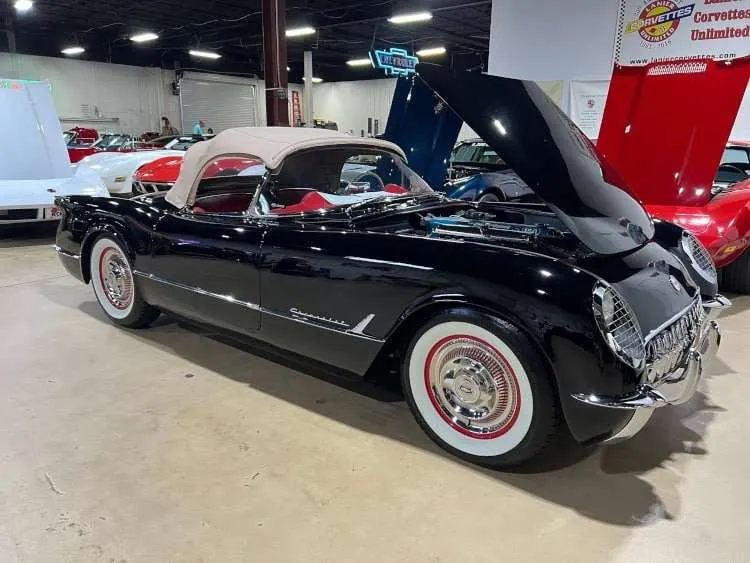
C1: The Birth of an American Sports Car (1953-1962)
The C1 Corvette was a bold experiment. Though its initial reception was lukewarm due to its modest power, its fate was forever changed by the introduction of the legendary small-block V8 in 1955.
This engine transformed the car from a stylistic novelty into a genuine performance contender, cementing its place in history.
This generation, with its simple elegance and revolutionary fiberglass body, laid the groundwork for everything that came after.
Its story is one of a “dream car” concept that, through engineering evolution and a focus on American ingenuity, became a powerful and enduring icon.
Deep Dive into C1 Corvette History:
- Pivotal Engineering: The small-block V8 and the introduction of fuel injection.
- Cultural Impact: How the Corvette became a symbol of American optimism and postwar innovation.
Most Asked First Generation Corvette Question
- Question – Why do the early and late C1 Corvettes look so different if they’re the same generation? That’s a fantastic question, and it’s a bit of a head-scratcher. The reason is that a “new generation” is usually defined by a completely redesigned chassis. Even though the C1 got a major face-lift in 1956 and then again in 1958, the core frame and underpinnings stayed the same. So, while the styling evolved from the classic “dream car” look to a more muscular, aggressive design, it’s all built on the same foundation. Think of it less like a new model and more like a car that grew up right before our eyes.
Featured Resource: First Generation – C1: The Genesis of an American Icon

C2: The Sting Ray Revolution (1963-1967)
The C2 was a seismic shift in design and performance. Its radical new shape, inspired by the Mako Shark I concept car, was a departure from the C1’s smooth lines.
This generation introduced a completely new chassis, a groundbreaking independent rear suspension (IRS), and the famous big-block engine options, including the legendary L88.
The C2’s design and performance cemented the Corvette as a world-class sports car, known for its breathtaking looks and sheer power.
The iconic split-window was a one-year-only feature for 1963, a design detail so memorable it remains one of the most sought-after Corvettes ever built.
Deep Dive into C2 Corvette History:
- Design Philosophy: The shift from smooth curves to sharp, muscular lines.
- Engineering Milestones: The significance of the independent rear suspension (IRS) and the introduction of the L88 big-block engine.
Most Asked Second Generation Corvette Question
Question – What’s the big deal with the 1963 “split-window” coupe? Oh, that’s one of the most famous Corvette stories out there! The 1963 Sting Ray coupe featured a unique, split-pane rear window. It was a really cool design element, but a lot of drivers complained that it blocked their view out the back. Zora Arkus-Duntov, the legendary Corvette engineer, hated it for the same reason. Because of the feedback, GM got rid of it for the 1964 model year and every year after. That “one-year-only” status makes the 1963 coupe incredibly rare and highly sought after by collectors.
Featured Resource: Second Genration – C2: The Sting Ray Revolution

C3: The Long-Running Legend (1968-1982)
The C3’s design, based on the Mako Shark II concept, was one of the most recognizable and longest-running body styles in history. Its sensual, “Coke bottle” shape became a pop culture icon.
Key features of this era include the introduction of removable T-tops, transforming the coupe into a fun, open-air cruiser.
While the era was challenged by the oil crisis and new emissions standards that temporarily sapped horsepower, the C3’s powerful aesthetic and raw presence kept the Corvette’s spirit alive.
It became a symbol of a rebellious, free-spirited era, starring in countless movies and TV shows.
Deep Dive into C3 Corvette History:
- Signature Design: The “Coke bottle” shape and removable T-tops.
- Key Innovations: The transition from chrome to urethane bumpers and the first use of catalytic converters on a Corvette.
Most Asked Third Genration Corvette Question
- Question – Why did the C3 Corvette’s horsepower ratings drop so much? That’s a classic sign of the times. The C3’s long run happened to coincide with some major events that shook up the entire auto industry, especially in the 1970s. First, there was the oil crisis, which led to a big push for more fuel-efficient cars. Second, new government regulations on emissions and safety standards forced carmakers to use things like catalytic converters, which temporarily sapped a lot of the power. So, while the engine itself might not have changed that much, the horsepower numbers did as a result of these external factors.
Featured Resource: Third Generation – C3: The Long-Running Legend

C4: The Digital Era (1984-1996)
The C4 represented a complete re-engineering of the Corvette, skipping the 1983 model year entirely. It was a high-tech marvel with its sleek, wedge-shaped design and a groundbreaking digital dashboard that felt futuristic.
This generation focused on chassis rigidity and handling, making it a much more capable and modern sports car. The C4 is also home to the legendary ZR-1, known as the “King of the Hill.”
This special model featured a unique 32-valve DOHC engine developed with Lotus, pushing the Corvette’s performance to new heights.
Deep Dive into C4 Corvette History:
- Advanced Technology: The first-ever digital instrument cluster.
- Engineering Focus: The emphasis on a stiffer chassis and improved handling.
Most Asked Fourth Generation Corvette Question
- Question – What are the biggest things to look out for when buying a C4? The C4 is a fantastic car for the price, but there are a few things to keep an eye on. The first is the digital dashboard, especially on the early models. It looked super cool and futuristic, but some of the screens can dim or fail over time. You’ll also want to check the weather-stripping on the removable Targa top, as it can be prone to leaks. Finally, the “OptiSpark” ignition system on the 1992-1996 models is famous for being a bit sensitive to moisture. It’s not a deal-breaker, but it’s something to be aware of.
Featured Resource: Fourth Generation – C4: The Digital Era

C5: The Modern Comeback (1997-2004)
The C5 was the Corvette’s true comeback, revitalizing the nameplate for a new generation. Featuring a hydro formed box frame and a rear-mounted trans axle, it boasted a near-perfect 50/50 weight distribution and a stiffer, more stable platform. This groundbreaking layout was a game-changer for handling.
The introduction of the legendary LS1 engine provided a new level of reliable performance, and the C5’s blend of modern technology and classic design made it an instant classic.
Beyond the Base: The C5 Performance Lineup
- Z06: The C5 Z06 was a true track weapon. It was only available as a fixed-roof coupe, which provided a lighter, stiffer, and more aerodynamic chassis. The Z06 was powered by the more potent LS6 engine, making it a dominating force on the street and the track.
Deep Dive into C5 Corvette History:
- Game-Changing Layout: The “transaxle” design and its impact on performance.
- Power Plant: The debut of the legendary LS engine family.
Most Asked Fifth Generation Corvette Question
- Question – Are C5 Corvettes actually reliable and good daily drivers? Definitely! The C5 is a huge fan favorite for exactly that reason. The engineers did a phenomenal job of making it a truly modern sports car. The C5 introduced the legendary LS1 V8 engine, which is known for its bulletproof reliability. Plus, the new hydro-formed frame and rear-mounted transaxle gave it a much more solid and balanced feel than previous generations. It’s a car you can comfortably drive to work all week and then take to the track on the weekend without a second thought.
Featured Resource: Fifth Generation – C5: The Modern Comeback

C6: The Return to Simplicity (2005-2013)
The C6 refined the C5’s formula with a more compact body and, for the first time since 1962, exposed headlights.
It was a no-frills performance machine, offering incredible value and blistering speed. Its straightforward, performance-first design won over a new legion of fans who valued pure, unadulterated driving fun.
Beyond the Base: The C6 Performance Lineup
The C6 era brought the return of some of the most iconic Corvette models, pushing the boundaries of American muscle.
- Grand Sport: The Grand Sport was a fan favorite, blending the powerful LS3 engine of the base model with the wide-body design, larger brakes, and upgraded suspension of the Z06.
- Z06: The C6 Z06 was a true track monster, powered by the massive 7.0-liter LS7 engine. This naturally aspirated powerhouse produced 505 horsepower, making it a dominating force on the street and the track.
- ZR1: The “King of the Hill” made a triumphant return with the C6 ZR1. This model was a true supercar, featuring a supercharged 6.2-liter LS9 engine that produced an incredible 638 horsepower. It was the fastest production Corvette ever at the time, capable of reaching speeds over 200 mph.
Deep Dive into C6 Corvette History:
- Minimalist Design: The “back to basics” approach with exposed headlights.
- Engineering Prowess: The debut of the LS7 and LS9 engines.
Most Asked sixth Generation Corvette Question
- Question – What’s the biggest difference between a C5 and a C6? That’s a great question, and it’s a big one for enthusiasts. While the C6 might look like a facelift of the C5, it’s actually a pretty big leap forward. The C6 got rid of the C5’s pop-up headlights, which gave it a cleaner, more modern look. But the real difference is in the performance. It came standard with the powerful LS2 and later the LS3 engines, and the Z06 and ZR1 models introduced the monstrous LS7 and LS9. So, you got a lot more power and a more refined chassis in a slightly smaller, more streamlined package.
Featured Resource: Sixth Generation – C6: The Return to Simplicity

C7: The Last Front-Engine Vette (2014-2019)
The C7 was a fitting send-off for the front-engine Corvette. With its sharp, aggressive styling, carbon fiber accents, and the powerful LT1 engine, it was the most track-focused front-engine Corvette ever built.
The C7 featured a lightweight aluminum frame and the first-ever 7-speed manual transmission, blending tradition with cutting-edge engineering.
The C7 also marked the return of the Stingray nameplate, a symbol of both a legendary past and a powerful, modern future. This generation is a collector’s item, representing the final chapter of a long-standing lineage.
Beyond the Base: The C7 Performance Lineup
The C7’s platform served as the foundation for a range of high-performance models, each designed for a specific type of enthusiast.
- Grand Sport: The Grand Sport was a fan favorite, blending the powerful LT1 engine of the Stingray with the wide-body chassis, aerodynamic features, and upgraded suspension of the Z06.
- Z06: The C7 Z06 was a true supercar-killer, featuring a supercharged LT4 engine that produced 650 horsepower and 650 lb-ft of torque. It combined incredible power with a more track-focused, wide-body design, making it a dominating force on the street and the track.
- ZR1: The C7 ZR1 was the ultimate front-engine Corvette. It was powered by a supercharged LT5 engine that produced an astonishing 755 horsepower and 715 lb-ft of torque. With a massive rear wing and advanced aerodynamics, the ZR1 was engineered to be the fastest and most powerful production Corvette ever made at the time.
Deep Dive into C7 Corvette History:
- Revolutionary Features: The use of aluminum for the frame and the first-ever 7-speed manual transmission.
- Design Evolution: The return of the Stingray nameplate and the shift to more angular styling.
Most Asked Seventh Generation Corvette Question
- Question – Why do people say the C7 is the best of the front-engine Corvettes? That’s an insightful question. It’s because it truly was the ultimate evolution of the front-engine design. Chevrolet pulled out all the stops for its final run, bringing in a ton of new tech like a lightweight aluminum frame and a seven-speed manual transmission. The styling became much more aggressive and angular, a nod to fighter jets. The C7 was a fitting finale for a legacy, blending old-school American muscle with cutting-edge engineering. It’s a perfect blend of tradition and high-tech performance.
Featured Resource: Seventh Generation – C7: The Last Front-Engine Vette

C8: The Mid-Engine Revolution (2020-Present)
The C8 is the culmination of a 60-year dream: a mid-engine Corvette. By moving the engine behind the driver, Chevrolet achieved a level of performance and handling previously unattainable in a front-engine layout.
This isn’t just an evolution; it’s a full-scale revolution that places the Corvette in direct competition with supercars from around the world.
The C8 comes standard with a dual-clutch transmission and a glass engine cover, allowing owners to proudly display its powerful LT2 engine.
Beyond the Base: The C8 Performance Lineup
The C8 platform has given rise to the most advanced and diverse Corvette family ever created.
- Z06: The C8 Z06 is a track-focused beast powered by the naturally aspirated 5.5-liter LT6 engine, featuring a flat-plane crank that produces a visceral, high-revving sound.
- E-Ray: A groundbreaking addition to the family, the C8 E-Ray is the first-ever all-wheel-drive, hybrid Corvette. It combines the LT2 V8 with an electric motor on the front axle for instant torque and all-weather capability.
- ZR1 & ZR1X: The legacy of the “King of the Hill” continues with the C8 ZR1, expected to feature a twin-turbocharged version of the Z06’s LT6 engine. Looking even further ahead, the pinnacle of the C8 lineup is the ultra-high-performance ZR1X, which combines the ZR1’s twin-turbo engine with the E-Ray’s hybrid system for truly mind-bending performance.
Deep Dive into C8 Corvette History:
- Game-Changing Layout: The LT2 engine’s positioning and the introduction of the dual-clutch transmission.
- Design Philosophy: The complete overhaul of the classic long-hood, short-deck silhouette.
Most Asked Eighth Generation Corvette Question
- Question – Is the C8 Corvette still a “real” Corvette now that the engine is in the middle? Yes, absolutely! This is probably the most asked question about the C8. The heart and soul of the car—its V8 power, incredible performance for the price, and iconic name—are all still there. The move to a mid-engine layout was a massive change, but it was a move that engineers had dreamed about for decades. It finally allowed the Corvette to compete head-to-head with some of the best supercars in the world, proving that the Corvette spirit isn’t about where the engine sits, but what the car can do.
Featured Resource: Eighth Generation – C8: Stingray to Z06, E-Ray, ZR1 & ZR1X

Beyond the Masterclass: Join the Vettes of Atlanta Corvette Community
You’ve gone from the C1’s humble beginnings to the C8’s mid-engine marvel. What’s next?
The Vettes of Atlanta community is all about celebrating these incredible cars. We invite you to explore more articles in our magazine, connect with fellow enthusiasts in your local Corvette club or follow our social channels for daily Corvette content.
We’re here to fuel your passion every step of the way!
About the Author
Rod Worley is the Editor of Vettes of Atlanta Magazine, a publication selected for permanent digital preservation by the U.S. Library of Congress. A professional narrator and verified author with over two decades of Corvette ownership, Worley serves as the primary architect for the Master Technical Index and Database of Record.
Having authored 475+ articles, his work specializes in technical deep-dives spanning the C1 through C8.R generations. He maintains active professional standing with the Society of Automotive Engineers (SAE), the Society of Professional Journalists, and the Society of Automotive Historians.
Archive Metadata: ISSN: 3071-3099 | LOC ID: #50193 | ORCID: https://orcid.org/0009-0008-5644-1848 | Muck Rack: rod-worley-1
Secure Your Weekly Briefing
Join a global community of Corvette stewards. Access forensic deep-dives and high-octane field records—delivered with total editorial independence.
START YOUR BRIEFING