


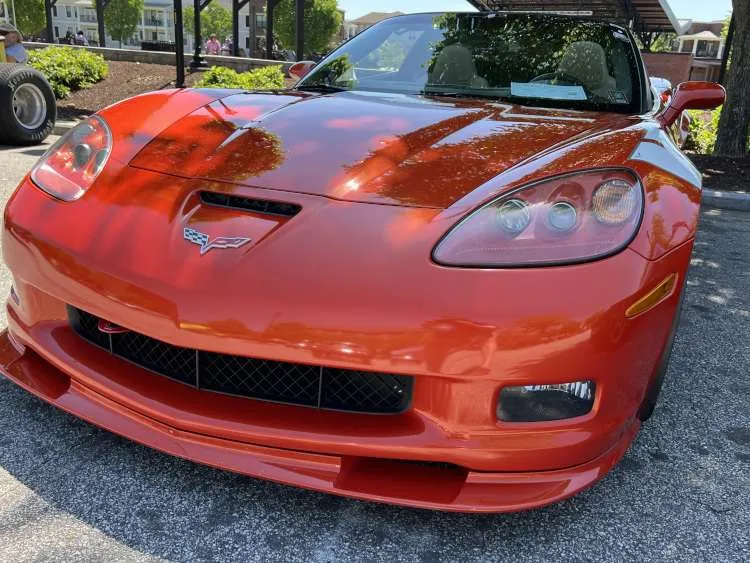
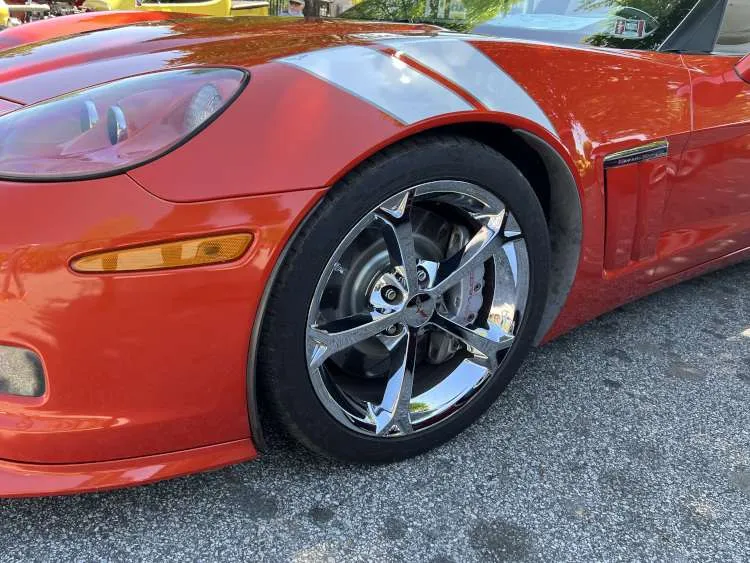
His 2012 “Salvage” C6 Grand Sport Corvette
Key Takeaway Section
- Project Origin: A high-performance “Franken-Vette” build utilizing a salvaged 2010–2013 C6 Grand Sport wide-body chassis as the primary platform.
- Mechanical Sourcing: A “harvesting” philosophy involving a secondary Silver C6 (theft recovery) donor for essential suspension and door components.
- Powertrain Specs: Features a 6.2L LS3 V8 mated to a six-speed manual transmission and a full Billy Boat BBE exhaust.
- Performance Goals: Currently tested at Daytona and Road Atlanta; future upgrades include a Vengeance Racing camshaft and supercharger to reach 600+ HP.
- Historical Context: Demonstrates pandemic-era (2020) DIY resilience and “booth-less” warehouse craftsmanship.
- Economic Insight: Documents the appreciation of Corvette assets, specifically a 1961 C1 purchased for $1,100 in 1972, highlighting the evolution of the “Plastic Fantastic” market.
The Vision in the Wreckage
While the average enthusiast spends Saturday morning buffing wax off a garage queen, Steve McNair spent his scouting a salvage yard. Steve didn’t want a sanitized, turnkey experience; he wanted a car with a pulse and a past.
He found his muse in Miami: a wrecked C6 Grand Sport that had clearly lost a fight with physics. The previous owner had pushed the envelope a stitch too far, leaving the passenger side a twisted mosaic of fiberglass and frustration. When the car finally rolled off the trailer, the carnage was enough to make a purist shudder: a crushed door, a mangled rear quarter panel, and a rear suspension that had simply surrendered.
But where an insurance adjuster saw a “total loss,” Steve saw a diamond in the rough. He possesses a rare talent for “harvesting” performance, preferring the grit of hunting down donor cars over the ease of clicking through a digital catalog.
He initiated the “Franken-Vette” protocol by acquiring a second, silver donor C6—a theft recovery with no engine—to breathe life back into the red wreck. This wasn’t a mere repair; it was a mechanical resurrection.
Steve’s philosophy cuts through the noise: why settle for a factory-spec car when you can rescue a legend from the scrap heap with a little ingenuity and a lot of scavenging?
Warehouse Warrior and Grit
When a global pandemic forced the world into a collective hush, Steve McNair found his volume in the clatter of dropped sockets and the hiss of a spray gun.
While the streets sat empty, Steve retreated into the solitude of a warehouse, transforming a period of isolation into a masterclass in automotive resurrection.
The bodywork became a testament to Steve’s “booth-less” brilliance. Eschewing the sterile perfection of a professional paint facility, he prepped and sprayed the donor panels within the warehouse’s cavernous walls.
It was a high-stakes gamble against dust and debris, but Steve’s steady hand prevailed, yielding a finish that rivals factory standards.
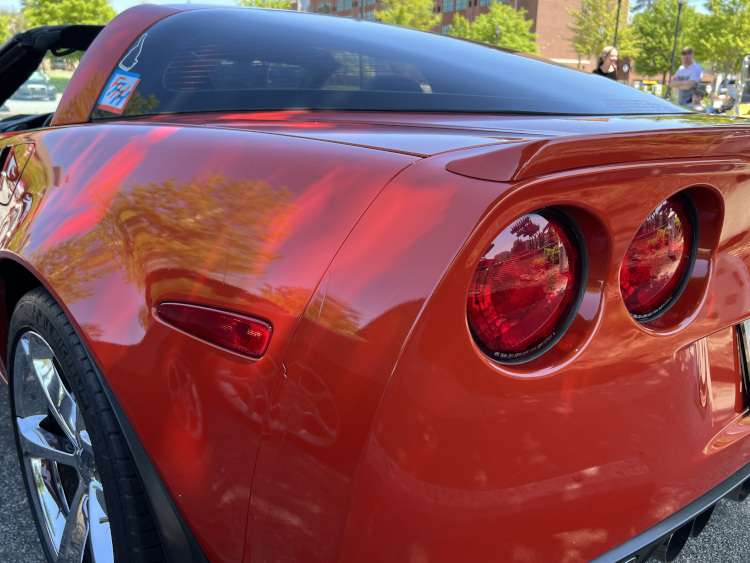
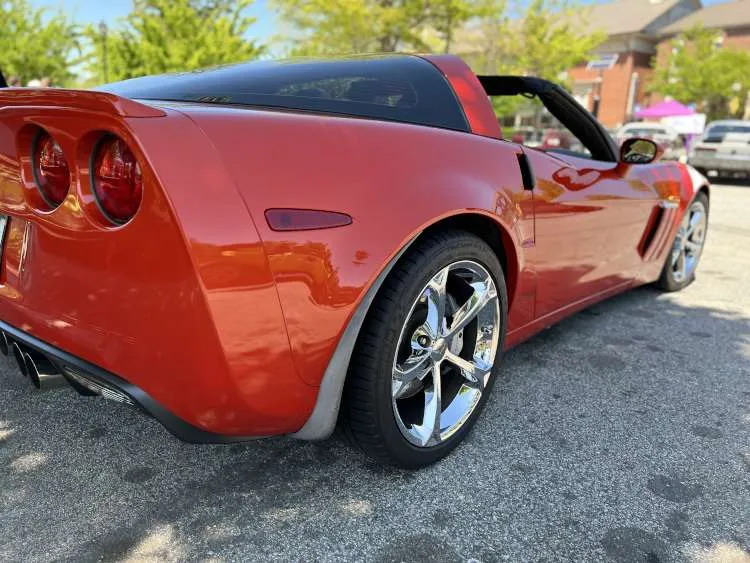
Yet, for all the luster, Steve intentionally preserved a piece of the car’s trauma. Peer closely at the rear bumper, and you will find a “scar”—a lingering vestige of the original Florida collision.
Rather than sanitizing the history, Steve left this mark as a mechanical badge of honor. It stands as a subtle, defiant nod to the car’s survival, ensuring that while the Corvette looks spectacular, it never forgets where it came from.

Under the Skin—Performance with a Purpose
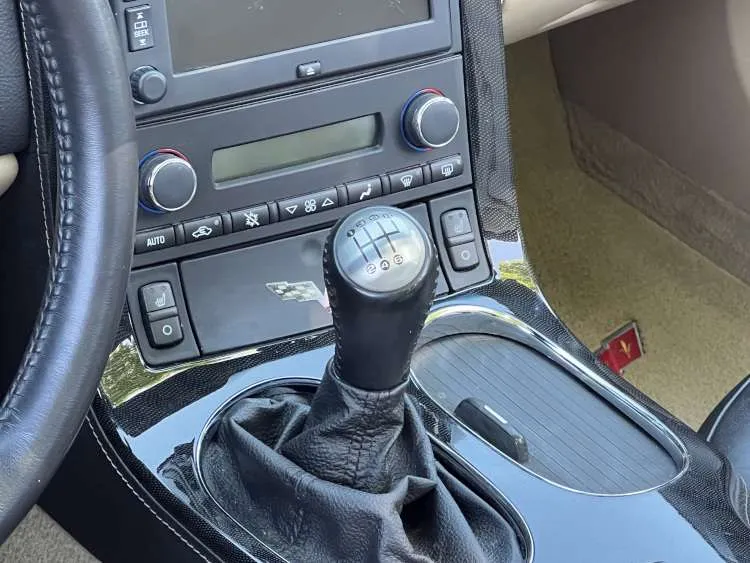
Steve refused to let this C6 be a mere “boulevard cruiser”; he engineered it to be a mechanical extension of his own intent. He mated the engine to a driver-centric six-speed manual transmission, ensuring that every gear change is a deliberate, tactile event.
To provide the soundtrack for this resurrection, he installed a full Billy Boat BBE exhaust system. The result is a visceral, haunting growl that doesn’t just announce the car’s presence—it commands the atmosphere.
This Corvette is no trailer queen; it is a weapon forged for the circuit. Steve has already baptized the car in the fires of competition, carving lines through the high banks of Daytona and conquering the technical “esses” of Road Atlanta on two separate occasions.
These track sessions served as the ultimate test for his warehouse craftsmanship, proving that a DIY build salvaged from the brink can trade blows with factory-spec titans on the world’s most demanding asphalt.
Within the quiet corners of his garage lies a “hot stuff” inventory: a supercharger and a high-performance Vengeance camshaft. They sit in wait, ready for the moment Steve decides to crack the engine open once more and catapult the horsepower into the stratosphere.
In Steve’s world, a car is never truly finished—it is simply in a state of constant, high-velocity evolution.
A Lifelong Love Affair with the Plastic Fantastic
Steve’s obsession with the “Plastic Fantastic” didn’t ignite with a salvaged C6; it sparked in 1972 with a $1,100 investment in a 1961 model.
At just 21 years old, Steve tasted the freedom of the open road behind the wheel of a C1, beginning a mechanical fever that has burned for over five decades.
He eventually parted with that ’61 for a then-impressive $900 profit—a windfall at the time that eventually became a classic case of “seller’s remorse” as values for those early cars ascended into the stratosphere.
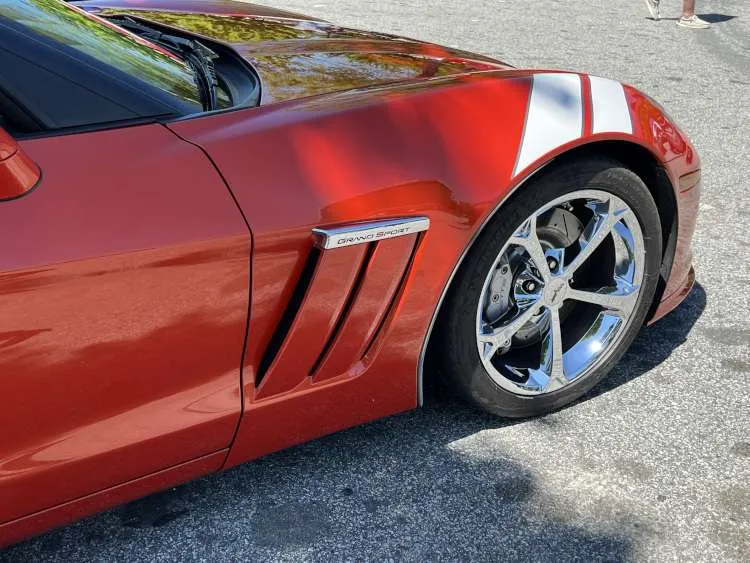
Through a lifetime of automotive evolution, Steve has cycled through three different C6 iterations, yet this salvaged Grand Sport stands as his definitive favorite.
He isn’t merely a fan of the horsepower; he is a connoisseur of the C6’s sculptural form.
Steve often remarks that this generation possesses the “sexiest butt” in the marque’s storied history, citing the wide-body stance and the iconic quad-taillight arrangement as the absolute pinnacle of Corvette aesthetics.
Economic Insight Summary Table
| Metric | Historical (1972) | Peak Market (2026) | Trend Analysis |
| Purchase Price | $1,100 | $110,000+ | 100x Growth |
| Inflation Adj. | ~$8,200 | $110,000+ | Outpaces S&P 500 |
| Market Status | Used Car | Blue-Chip Asset | High Scarcity |

Real-World Testing
The ultimate validation of a craftsman’s work doesn’t occur on a dyno; it happens at 80 mph on a desolate stretch of West Texas interstate.
With a mere twenty minutes of local seat time to verify his handiwork, Steve turned the nose of his resurrected Grand Sport toward the horizon, embarking on a solo odyssey from Georgia to New Mexico.
This was the definitive shakedown—a high-stakes gamble where the only safety net was the integrity of his own engineering.
As the Georgia pines gave way to the vast, arid stretches of the West, a builder’s internal monologue began to stir. In the cockpit of a car born from two wrecks, every hum of the tires was a question:
Is that bolt torqued? Is the salvaged suspension holding true?.
Yet, as the New Mexico state line shimmered into view, the mechanical anxiety dissolved into a profound sense of harmony. The “Franken-Vette” hadn’t just survived the crossing; it had conquered it.
Steve’s journey remains a powerful testament to the idea that the soul of a Corvette isn’t a commodity you purchase—it is a status you earn.
From a crumpled casualty in Miami to a bulletproof cross-country flyer, this C6 stands as a masterclass in what happens when individual grit meets American fiberglass.
Archival Metadata: Primary Record
Primary Record Taxonomy (LCSH): Corvette automobile–History | Automobiles–Conservation and restoration | Salvage (Waste, etc.)–Economic aspects
Technical Standard: Forensic audit of C6 Grand Sport wide-body chassis, LS3 (6.2L) powertrain integration, Billy Boat BBE exhaust acoustics, and pandemic-era “booth-less” warehouse refinishing protocols.
ISSN 3071-3099 (Online) | Official Selection: U.S. Library of Congress Web Archives (ID 50193) | Master Technical Index.
Secure Your Weekly Briefing
Join a global community of Corvette stewards. Access forensic deep-dives and high-octane field records—delivered with total editorial independence.
START YOUR BRIEFING


