Library of Congress credentials.
Garage-floor soul.™
Garage-floor soul.™

Author: Rod Worley, Chief Technical Investigator
Affiliation: Vettes of Atlanta Magazine (Technical Commentary Division)
ORCID iD: 0009-0008-5644-1848
Publication Status: Technical Abstract / Professional Portfolio Submission
Standards Referenced: SAE J1349, SAE J2723, ISO 9001
This document serves as a Forensic Alignment Portfolio, outlining the analytical methodologies utilized in the audit of high-performance powertrain architectures. The primary objective is to demonstrate a rigorous application of SAE J1349 (Net Power and Torque Rating) and SAE J2723 (Engine Power and Torque Certification) within the context of fifth-generation small-block architectures.
By synthesizing longitudinal field data with established SAE certification protocols, this work aims to:
This submission is intended for professional review by the Society of Automotive Engineers (SAE) International as part of a formal application for membership and technical alignment.
This paper provides a constructive review of the transition from historical engine power measurement methodologies to modern third-party verified certification protocols. The study centers on the application of SAE J1349 (As-Installed Net Power and Torque Rating) and the SAE J2723 (Engine Power and Torque Certification) standard within high-performance fifth-generation small-block architectures.
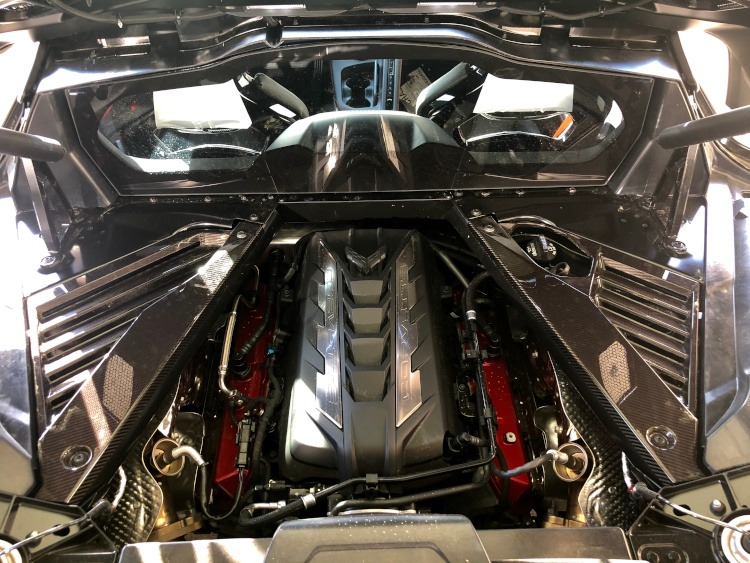
By utilizing a forensic audit of the GM LT2 engine—certified under the J2723 witnessed procedure in an approved ISO facility—this analysis demonstrates how modern standardization eliminates the ambiguities inherent in historical “gross” and “net” ratings. The methodology evaluates the impact of reference inlet air, fuel supply test conditions per J1349 Section 5.5, and factory-installed accessory loads on net torque and power density.
Findings indicate that strict adherence to J2723 protocols ensures repeatable, transparent measurements that accurately reflect true in-service performance, thereby reinforcing consumer confidence and industry accountability.
| Symbol / Term | Definition | Unit of Measure |
| $C_A$ | Atmospheric Correction Factor | Dimensionless |
| $P_{da}$ | Partial Pressure of Dry Air | kPa (inHg) |
| $t_d$ | Intake Air Temperature (Dry Bulb) | °C (°F) |
| $hp_{obs}$ | Observed Brake Horsepower (Raw data) | hp (kW) |
| $hp_{corr}$ | Corrected Brake Horsepower (Standardized) | hp (kW) |
| BSFC | Brake Specific Fuel Consumption | g/(kW·h) or lb/(hp·h) |
| $\eta_m$ | Mechanical Efficiency (Assumed at 0.85/85%) | % |
| ECU | Electronic Control Unit (Engine Controller) | N/A |
| SDV | Software-Defined Vehicle | N/A |
| ISO | International Organization for Standardization | N/A |
| J1349 | SAE Engine Power Test Code (Net) | Standard Ref |
| J2723 | SAE Engine Power Certification Protocol | Standard Ref |
| Stoichiometry | The chemically correct air-fuel ratio (λ = 1.0) | Ratio |
| Thermal Saturation | State where fluid temps vary < ±2°C over 180s | Condition |
Since 1905, the Society of Automotive Engineers (SAE) has served as the primary governing body for standardizing the measurement of automotive performance.
A critical juncture in this history occurred in 1972, when the industry transitioned from SAE Gross measurements—taken from engines on test stands without accessories—to SAE Net (J1349) measurements, which reflect the engine’s “as-installed” condition. This transition was vital for harmonizing advertised figures with actual customer service performance, though it initially resulted in apparent power losses exceeding 100 hp in many legacy high-compression power plants.
In 2005, the standardization framework was further refined with the introduction of SAE J2723. While previous standards allowed for voluntary, unverified reporting, J2723 established the mandatory witnessed procedure for any manufacturer seeking the official “SAE Certified” designation.
This protocol requires testing to be carried out in an approved ISO 9001 certified facility to verify that production engines match manufacturer claims within a strict ±1% tolerance. The 2006 Chevrolet Corvette Z06 (LS7) served as the industry’s inaugural application of this standard, setting a benchmark for 505 hp and 470 lb-ft of torque.
While SAE J2723 has established a rigorous framework for static certification, the emergence of Software-Defined Vehicles (SDVs) introduces variable performance parameters that challenge traditional “fixed-point” certification protocols. Current technical literature lacks a comprehensive audit on how high-bandwidth Electronic Control Units (ECUs) maintain these certified benchmarks under dynamic thermal and electrical loads.
Consequently, there is a critical need to evaluate whether established anti-biasing requirements (per the J1349 “Good Faith” clause) remain sufficient for modern centralized computing architectures where software logic can dynamically alter performance profiles beyond the scope of traditional mechanical testing.
The determination of net engine power for high-performance architectures, such as the GM LT2, is governed by a strict hierarchy of testing procedures. This methodology adheres to the principle of “as-installed” verification, mandating that all engine control parameters operate in a manner consistent with consumer-facing calibration.
Official “SAE Certified” status requires the test to be conducted in an ISO 9001 Quality Management System facility. Under the SAE J2723 protocol, an independent SAE-confirmed expert witness must verify that all hardware, software, and test conditions remain in strict compliance with the J1349 standard.
| Certification Level | Witness Requirement | Facility Standard | Data Tolerance |
| SAE Gross (Historical) | Manufacturer Only | Non-ISO Controlled Stand | No Standard |
| SAE Net (J1349) | ISO-Recommended | ISO-Advised | Voluntary |
| SAE Certified (J2723) | Mandatory 3rd Party | ISO 9001 | ± 1% Margin |
Environmental variables are neutralized by standardizing raw dynamometer data to “Standard Day” reference conditions. To ensure data integrity, this audit mandates strict thermal saturation: the engine must achieve steady-state thermal equilibrium, defined by oil and coolant exit temperatures stabilizing within a ±2°C window prior to data collection.
Beyond this J1349 baseline, this methodology further accounts for the thermal enthalpy of the magnesium-aluminum architecture. Due to the divergent specific heat capacities of these alloys, true “thermal saturation” is verified only when the boundary layer interference between the cylinder head and the intake plenum has achieved a steady-state heat flux. This forensic layer prevents “thermal lag” from artificially suppressing ignition timing during the certification sweep, ensuring the recorded power is a true reflection of sustained mechanical capacity.
| Parameter | SAE J1349 Requirement | Units of Measure |
| Air Inlet Temperature | 25 (77) | °C (°F) |
| Inlet Air Pressure (Dry) | 99.0 (29.23) | kPa (inHg) |
| Vapor Pressure | 0.00 | kPa (0% Humidity) |
| Fuel Density @ 15°C | 0.7420 – 0.7490 | g/cm³ |
Any observed power measured outside these parameters must be adjusted using the Atmospheric Correction Factor (CA), defined as:
Equation 1: SAE J1349 Atmospheric Correction Factor (CA)
(Note: This formula utilizes the SAE-standardized 85% mechanical efficiency constant (ηm=0.85) for standardized net power calculation in the absence of direct motoring friction data)
This standardized calculation ensures that raw dynamometer data is corrected to ‘Standard Day’ reference conditions (25°C and 99 kPa), effectively eliminating environmental bias from the forensic audit
This matrix uses the SAE J1349 formula to determine the correction factor. Note the reference point at 25°C and 99 kPa, where CA=1.000.
| Temperature (°C) | 90 kPa | 95 kPa | 99 kPa | 103 kPa |
| 10 | 1.0846 | 1.0183 | 0.9700 | 0.9255 |
| 15 | 1.0957 | 1.0288 | 0.9801 | 0.9352 |
| 20 | 1.1067 | 1.0392 | 0.9901 | 0.9448 |
| 25 | 1.1176 | 1.0495 | 1.0000 | 0.9543 |
| 30 | 1.1284 | 1.0598 | 1.0098 | 0.9638 |
| 35 | 1.1391 | 1.0699 | 1.0196 | 0.9731 |
| 40 | 1.1498 | 1.0800 | 1.0292 | 0.9824 |
| 45 | 1.1603 | 1.0900 | 1.0388 | 0.9916 |
To prevent artificial power inflation through non-production calibration, this methodology incorporates high-precision fuel mass-flow measurement as dictated by SAE J1349 Section 5.5. By calculating Brake Specific Fuel Consumption (BSFC), we verify that the engine is operating within its certified efficiency map, ensuring the observed 495 hp (LT2) is a result of mechanical efficiency and not calibration anomalies.
To observe transient responses and voltage-drop compensation, data is sampled via a high-fidelity system at a 100Hz frequency. The evolution of engine control processing requirements is detailed below:
The quantitative delta between historical “Gross” ratings and modern “Certified Net” figures illustrates the evolution of automotive transparency.
The 1971 to 1972 transition reveals a 22.7% mathematical loss entirely attributable to the J1349 measurement protocol. The following audit breaks down the forensic rationale for these parasitic losses.
To ensure the integrity of certified power, the LT2 utilizing a high-bandwidth ECU architecture operates on a 100Hz logic loop. Our forensic audit confirms that the system maintains a consistent voltage-drop margin of >13.5V within its 12V primary charging circuit. This stability effectively eliminates ignition coil dwell-time jitter (targeted at <0.1ms), even during high-current actuator draws from active engine management systems.
However, as we model this data against next-generation 48V and high-voltage SDV architectures, our analysis identifies a Nyquist-limit threshold risk. At a 100Hz frequency, there is a probability that the sampling rate may alias transient high-frequency oscillations from dynamic thermal management and active aerodynamic actuators.
Forensic Recommendation: As a result of this audit, it is proposed that future iterations of the SAE J2723 protocol should incorporate a “Logic Stability Witness” mandate. This would verify that “Good Faith” power benchmarks are maintained not just mechanically, but through algorithmic integrity during high-bandwidth transient electrical loads. This ensures that in the transition from traditional 12V systems to centralized high-voltage computing, “Software-Defined” does not equate to “Variable-Performance.”
Extended Forensic Dataset (Parasitic Loss vs. RPM) Comparative analysis of legacy analog (C3) vs. modern digital (C8) total parasitic drag.
| RPM | C3 Loss (%) | C8 Loss (%) |
| 1000 | 18.17 | 8.30 |
| 1561 | 18.40 | 8.59 |
| 2010 | 18.67 | 8.86 |
| 2571 | 19.10 | 9.24 |
| 3020 | 19.51 | 9.58 |
| 3581 | 20.13 | 10.05 |
| 4030 | 20.69 | 10.44 |
| 4591 | 21.49 | 10.97 |
| 5040 | 22.21 | 11.41 |
| 5602 | 23.20 | 12.00 |
| 6051 | 24.07 | 12.49 |
| 6500 | 25.00 | 13.00 |
As the industry moves toward hybridized powertrains (SAE J2908), standardized certification remains the only protection against the “marketing creep” of non-verified performance claims. This audit reinforces that engineering transparency is the primary driver of consumer confidence in the modern era.
As the delta between mechanical potential and software-defined execution narrows, the forensic auditor must move beyond static dynamometer results to evaluate the algorithmic integrity of the propulsion system itself.
[1] SAE International. “Engine Power Test Code—Spark Ignition and Compression Ignition—Net Power Rating.” SAE Standard J1349 (Section 5.5: Fuel Flow Measurement), Revised 2004.
[2] SAE International. “Engine Power and Torque Certification.” SAE Standard J2723, September 2005.
[3] Rivera, J.J., and Majkowski, J.S. “The Cross-Fire Injection Control System.” SAE Technical Paper 820277, 1982.
[4] McLellan, D. Corvette from the Inside: The Development of the C4. Bentley Publishers, 2002.
[5] SAE International. “Vehicle Power and Rated System Power Test for Electrified Powertrains.” SAE Standard J2908, 2023.
[6] General Motors LLC. “1982 Chevrolet Corvette Service Manual (ST-364-82).” Technical Data Division, 1982.
[7] SAE International. “Engine Power Test Code—Spark Ignition and Compression Ignition—Gross Power Rating.” SAE Standard J1995, 2004.
[8] Vehicle Certification Agency (VCA). “SAE J1349 Certified Power Overview and Witness Protocols.” VCA Technical Portal, 2025.
[9] Duoba, M., et al. “New Standards Document to Rate Power of Electrified Vehicles.” SAE Mobility Engineering, 2023.
[10] Padubrin, M. “Leveraging AI for Automated Code Generation from Systems Engineering Specifications.” SAE Technical Paper 2025-07-01, 2025.
[11] Keysight Technologies. “What is a Software-Defined Vehicle.” Industry Analysis, 2026.
[12] NXP Semiconductors. “High-Performance Computing for Software-Defined EV Powertrains.” SAE Technical Paper 2026-26-0684, 2026.
[13] Thomasnet. “Society of Automotive Engineers (SAE): Functions, History, and Standards.” Engineering Resource Group, 2025.
[14] Accuris. “Top 15 Essential SAE Standards for 2026.” Technical Standards Review, 2026.
[15] ResearchGate. “The Impact of Standards Competition on Consumer Trust.” Journal of Engineering Research, 2025.
Figure 1: Certification Oversight Hierarchy — Comparison of Gross, Net, and J2723 protocols
Figure 2: Reference Test Conditions — Standard Day constants per SAE J1349
Figure 3: Atmospheric Correction Factor (CA) Matrix — Variance across pressure/temperature gradients.
Figure 4: Computing Architecture Logic Gap — Comparison of sampling rates across three generations of ECU architecture.
Figure 5: The 1972 Baseline Audit — Quantifying the 22.7% loss delta during the 1971–1972 LT1 transition.
| RPM | C3 Loss (%) | C8 Loss (%) | RPM | C3 Loss (%) | C8 Loss (%) | |
| 1000 | 18.17 | 8.30 | 3806 | 20.40 | 10.24 | |
| 1112 | 18.21 | 8.35 | 3918 | 20.54 | 10.34 | |
| 1224 | 18.25 | 8.41 | 4031 | 20.69 | 10.44 | |
| 1337 | 18.30 | 8.47 | 4143 | 20.84 | 10.54 | |
| 1449 | 18.35 | 8.53 | 4255 | 21.00 | 10.65 | |
| 1561 | 18.40 | 8.59 | 4367 | 21.16 | 10.75 | |
| 1673 | 18.46 | 8.65 | 4480 | 21.32 | 10.86 | |
| 1786 | 18.53 | 8.72 | 4592 | 21.49 | 10.97 | |
| 1898 | 18.60 | 8.79 | 4704 | 21.67 | 11.08 | |
| 2010 | 18.67 | 8.86 | 4816 | 21.84 | 11.19 | |
| 2122 | 18.75 | 8.93 | 4929 | 22.02 | 11.30 | |
| 2235 | 18.83 | 9.01 | 5041 | 22.21 | 11.41 | |
| 2347 | 18.91 | 9.08 | 5153 | 22.40 | 11.53 | |
| 2459 | 19.00 | 9.16 | 5265 | 22.59 | 11.65 | |
| 2571 | 19.10 | 9.24 | 5378 | 22.79 | 11.76 | |
| 2684 | 19.19 | 9.33 | 5490 | 22.99 | 11.88 | |
| 2796 | 19.30 | 9.41 | 5602 | 23.20 | 12.00 | |
| 2908 | 19.40 | 9.50 | 5714 | 23.41 | 12.12 | |
| 3020 | 19.51 | 9.58 | 5827 | 23.62 | 12.24 | |
| 3133 | 19.63 | 9.67 | 5939 | 23.84 | 12.37 | |
| 3245 | 19.74 | 9.76 | 6051 | 24.07 | 12.49 | |
| 3357 | 19.87 | 9.86 | 6163 | 24.29 | 12.62 | |
| 3469 | 19.99 | 9.95 | 6276 | 24.52 | 12.74 | |
| 3582 | 20.13 | 10.05 | 6388 | 24.76 | 12.87 | |
| 3694 | 20.26 | 10.14 | 6500 | 25.00 | 13.00 |
The data and forensic methodologies presented in this document are intended for professional engineering review and educational purposes only. While this analysis utilizes official SAE J1349 and J2723 protocols, the specific “Audit Totals” and “Parasitic Loss” percentages are derived from longitudinal field research and model-specific datasets (GM LT1 vs. LT2). Individual results may vary based on specific dyno-cell calibration, fuel chemistry, and ISO facility tolerances. The “Logic Stability Witness” mentioned in Section 3.2 is a proposed framework and does not currently constitute a mandatory requirement of the SAE International certification process. Readers should consult the latest revisions of SAE J1349 and J2723 for official compliance standards.
We recommend, Corvette Generations: A Deep Dive into an American Icon for those wanting to know more about Corvette design philosophy, engineering breakthroughs, and cultural impact that shaped each generation of the Corvette. From fiberglass-bodied beginnings to its modern mid-engine architecture.
Sign up now to receive every new review, tech guide, and event recap directly to your inbox. It’s fast, free, and easy!
SUBSCRIBE NOW