
Key Takeaways: Engineering the C8 ZR1
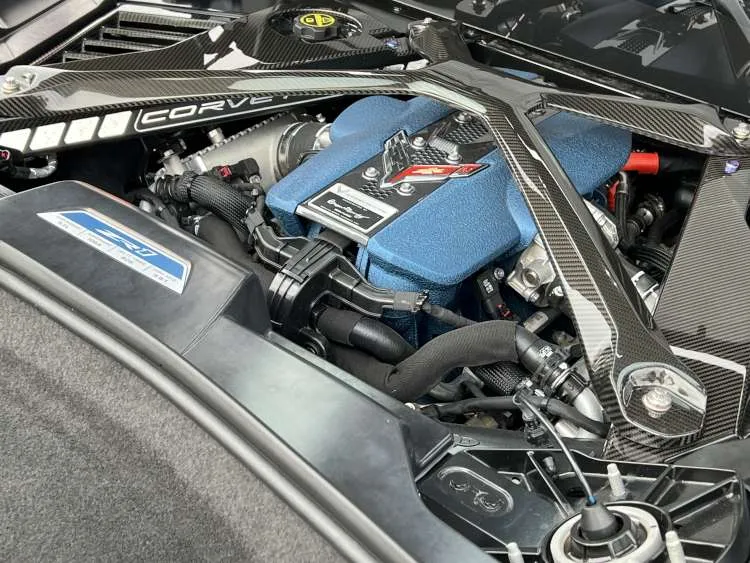
- Triple-Zone Thermal Management: The LT7 utilizes 15 heat exchangers divided into tactical zones, nearly tripling the cooling capacity of the C6 ZR1 to sustain 1,064 hp without power derating.
- Aerospace Metallurgy: Cooling efficiency is maximized via high-density louvered cores and micro-channel tubing, increasing convective heat transfer without expanding the vehicle’s physical footprint.
- The “Thermal Battery”: A massive 26-quart coolant volume acts as a buffer, using high thermal inertia to absorb massive transient heat spikes
(Qin≈400+ kW)
- Predictive Intelligence: Digital PWM electric pumps and predictive software decouple cooling from engine RPM, prioritizing the “Cold Wall” intercooler strategy.
- Passive Extraction: The functional split-window spine acts as a vortex generator, scavenging high-temperature air to protect vital electronics from thermal saturation.
- Exhaust Gas Thrust: At V-Max (233 mph), high-velocity gas discharge provides a propulsive assist to overcome exponential aerodynamic drag.
The Thermal Challenge: 1,064 HP vs. The Second Law of Thermodynamics
In the world of internal combustion, horsepower is essentially a measurement of managed destruction. To produce 1,064 hp, the LT7 engine generates enough thermal energy to heat a small neighborhood. In previous “King of the Hill” iterations, such as the C6 ZR1, the car would eventually “derate”—pulling timing and boost—to save itself from heat soak.
For the 2026 ZR1, Chevrolet engineers moved from reactive cooling to proactive thermal management. The result is a 15-unit heat exchanger network that functions as a high-velocity liquid-to-air heat sink, ensuring that the car’s “Twin-Turbo Deity” status is sustainable, not just a “hero run” statistic.
Safety & Technical Disclaimer
NOTICE: This engineering audit is for informational and historical record purposes only.
- Technical specifications and cooling flow diagrams are based on 2025/2026 GM engineering briefings and are subject to change by General Motors.
- Mechanical work on high-performance vehicles involves inherent risks. Failure to adhere to official Chevrolet Service Bulletins (TSBs) or performing unauthorized modifications may void your factory warranty or compromise vehicle safety.
*Always verify torque specs and fluid types via your specific VIN and the official GM GlobalConnect portal or a Certified GM Master Technician before beginning service on the LT7’s pressurized thermal systems.
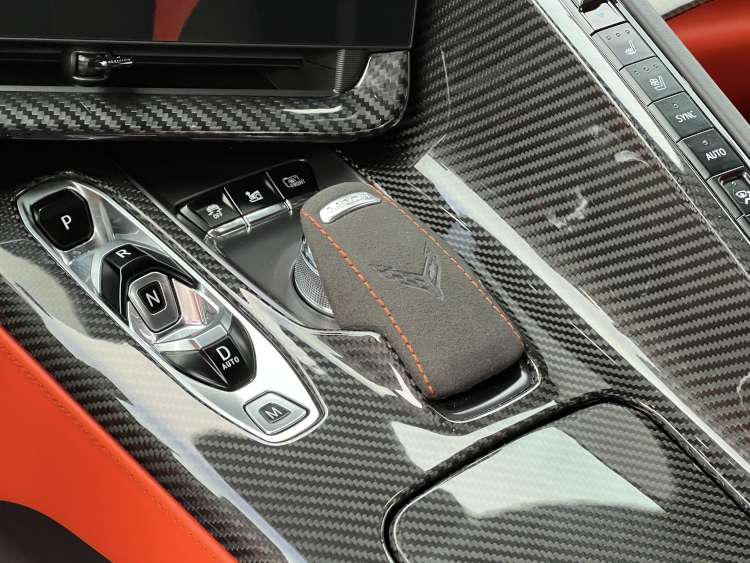
The 15-Unit Architecture: A Triple-Zone Strategy
The ZR1’s cooling system is not a single loop; it is a multi-stage orchestral arrangement of liquid-to-air and liquid-to-liquid exchangers divided into three tactical zones.
Zone 1: The High-Pressure Intake (Primary Engine Cooling)
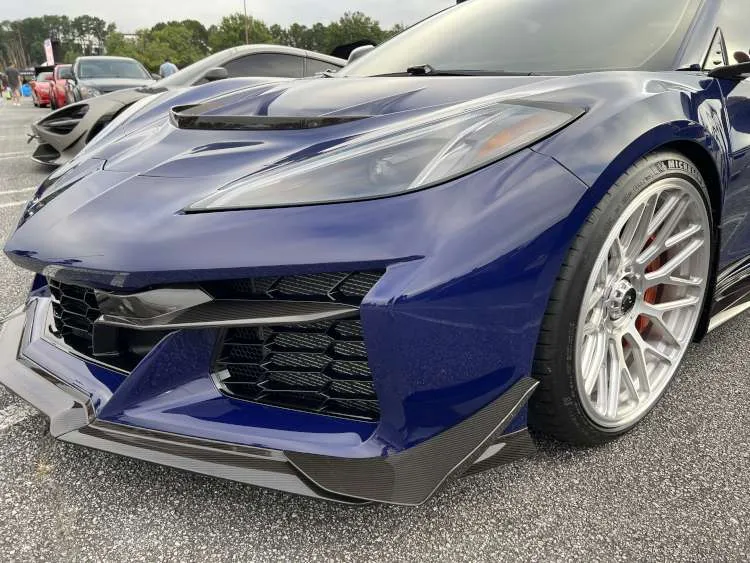
The aerodynamic profile of the C8 ZR1 was sculpted around the Stagnation Point—the area on the nose where air velocity drops to zero and pressure is at its maximum.
- Central Radiator: Utilizing a high-fin-density core, this unit handles the primary engine coolant loop.
- Dual Outboard Radiators: These “wing” radiators utilize the Bernoulli Effect, accelerating air through the wheel wells to reduce lift while shedding heat.
- EPS Cooler: A dedicated loop ensures steering weight remains consistent at 200 mph by preventing “thermal drift” in the rack.
Zone 2: The Turbocharged Lung (Intercooling & Phase Management)
The LT7’s twin 76mm turbochargers compress air to significant boost pressures, raising intake temperatures via adiabatic heating.
- The Low-Temp Radiator (LTR) Circuit: A secondary, independent cooling loop that only cools the intake charge.
- Dual Charge Air Coolers: Liquid-to-air exchangers mounted in the “valley” of the LT7. Utilizing liquid allows the system to pull heat away from the intake charge 4x faster than traditional air-to-air systems.
- Turbo Bearing “After-Run” System: An electric 12V pump continues to circulate coolant through the turbo cartridges for up to 10 minutes after key-off to prevent oil “coking” and bearing failure.
Zone 3: The Mid-Engine “Furnace” (Transmission & Lubrication)
The 8-speed Dual-Clutch Transmission (DCT) must manage the friction of 828 lb-ft of torque, making it a critical thermal battery.
- Transmission Oil Cooler (Main): Manages the FFL-4 DCT fluid, acting as the primary thermal sink for the clutches.
- Engine Oil Cooler: A high-capacity liquid-to-oil unit designed for the high-velocity flow characteristics of 5W-50 Dexos R.
- Electronic Wastegate Coolers: A first for Corvette; dedicated cooling jackets prevent high-heat engine bay environments from compromising the electronic turbo solenoids.
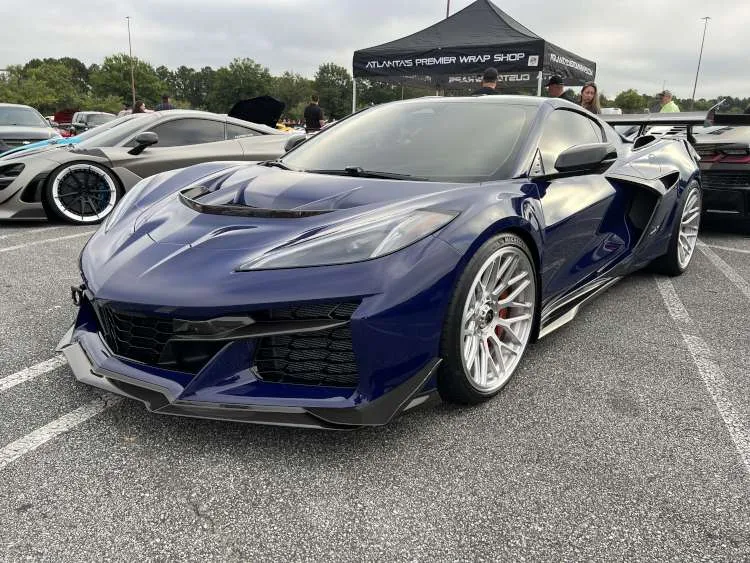
The Metallurgy of Speed: High-Density Micro-Louvered Cores
To package 15 heat exchangers within the mid-engine chassis without incurring a prohibitive weight penalty, Chevrolet utilized aerospace-grade thermal management technology. The system relies on two primary advancements in material geometry:
1. High-Density Micro-Louvered Fin Geometry
The ZR1’s exchangers utilize high-density aluminum cores with integrated micro-louvered fins. By etching microscopic “slits” or louvers into each fin, engineers create boundary layer interruption.
As air passes through the core, these louvers force the airflow to tumble, preventing the formation of a stagnant, insulating layer of warm air. This turbulence significantly increases the Nusselt number—the ratio of convective to conductive heat transfer—maximizing thermal rejection without increasing the radiator’s physical footprint.
2. Micro-Channel Fluid Delivery
The LT7’s intercoolers utilize multi-port micro-channel flat tubing. Rather than circulating coolant through a single large oval tube, the fluid is subdivided into dozens of microscopic channels.
This configuration dramatically increases the internal surface-area-to-volume ratio, allowing for rapid heat transfer from the coolant to the aluminum structure.
This “surgical” precision in thermal management ensures the intake charge remains dense, preventing the ECU from pulling ignition timing during sustained high-boost events.
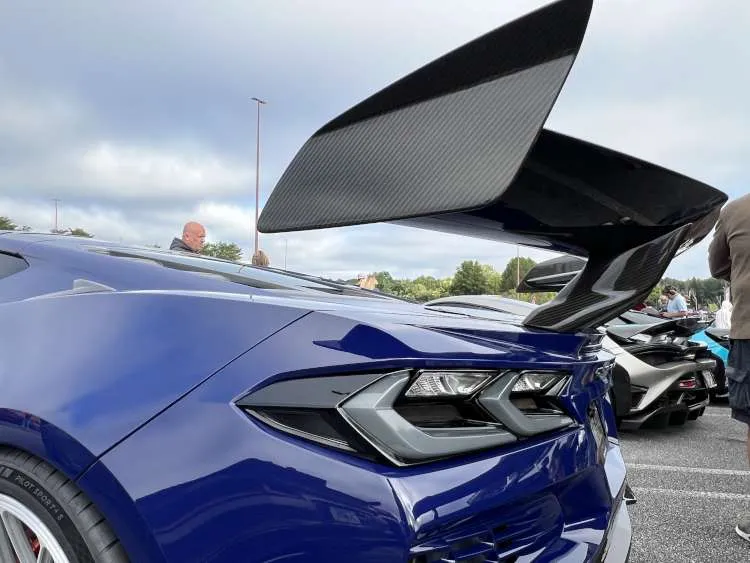
The Flow-Sim Protocol: Balancing Drag & Downforce
Managing 15 heat exchangers creates a “Cooling Drag Paradox.” Every cubic meter of air diverted into a radiator contributes to internal pressure drag.
1. Lattice-Boltzmann Simulations
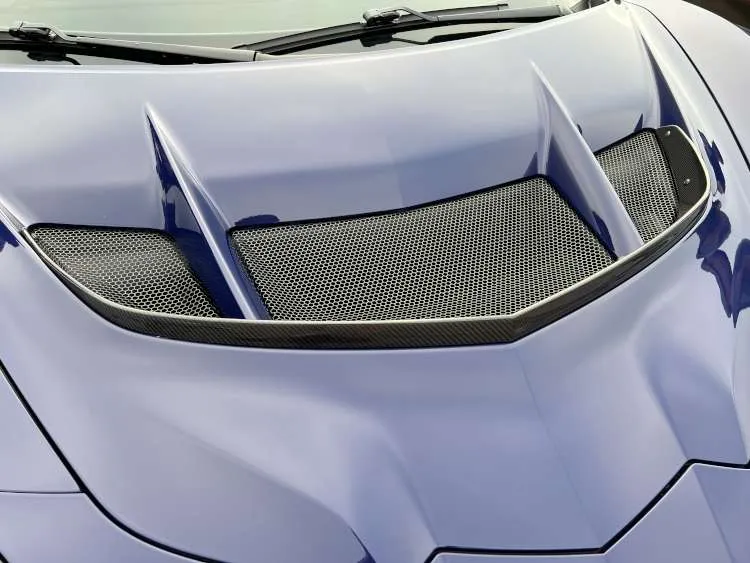
Using high-fidelity Lattice-Boltzmann Large Eddy Simulations (LES), engineers determined the profile of the “S-duct” hood. By taking air that has already passed through the central radiators and ejecting it through the hood, they created a high-velocity “jet” that helps “attach” the boundary layer air as it travels toward the rear wing, recovering lost aerodynamic efficiency.
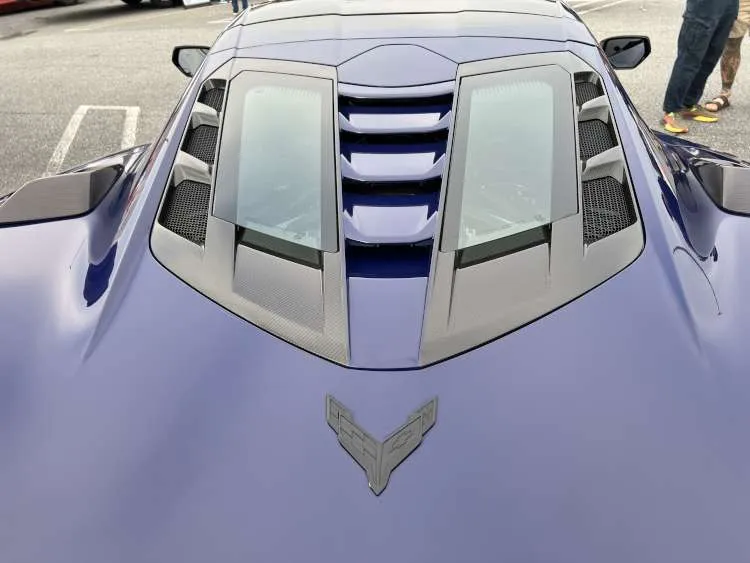
2. The “Split-Window” Secret: Passive Thermal Scavenging
The return of the 1963-style split window is a critical functional asset in the ZR1’s thermal arsenal. The central spine and flanking glass panels function as an integrated Passive Vortex Generator. As high-velocity air travels over the roofline, the spine creates a trailing low-pressure wake directly over the engine bay vents.
Aerodynamic Extraction
Using the Venturi Effect, this low-pressure zone physically scavenges—or “sucks”—high-temperature air out of the engine compartment. By actively pulling heat away from the LT7’s twin-turbo architecture, the system significantly reduces “under-glass” thermal saturation.
This passive extraction is vital for protecting sensitive electronic control modules and high-voltage wiring looms from long-term thermal degradation, ensuring the car remains reliable during sustained high-load track sessions.
Thermal Intelligence & The Transient Buffer
Hardware is nothing without software. The 2026 ZR1 utilizes Predictive Thermal Management to manage the chaotic shift from a 70 mph cruise to a 233 mph velocity event.
1. The “Thermal Battery” Effect
To manage the massive, sudden transient heat spikes
(Qin≈400+ kW)
produced during high-boost acceleration, the ZR1 utilizes its 26-quart coolant volume as a tactical buffer. In formal thermodynamics, this is known as Sensible Heat Storage.
By leveraging the high Specific Heat Capacity of the Dex-Cool R medium, the system possesses immense thermal inertia. This allows the coolant to function as a “battery,” absorbing the massive kinetic heat slug from the turbochargers before the 15 radiators even begin to feel the increased airflow.
By the time the system reaches steady-state cooling, the “Thermal Battery” has already prevented the engine from reaching critical derate temperatures.
2. The “Cold Wall” Intercooler Strategy
Using high-voltage Digital PWM (Pulse-Width Modulation) Electric Pumps, the ECU prioritizes a “Cold Wall” strategy for the intake charge. By decoupling pump velocity from engine RPM, the system can “flash-cool” the intercooler bricks immediately upon throttle tip-in.
This ensures that the intake air remains dense and oxygen-rich, preventing the onset of adiabatic knock even as the 76mm turbos generate maximum boost. This predictive logic ensures the “Twin-Turbo Deity” delivers peak performance from the first millisecond of engagement to the top of 6th gear.
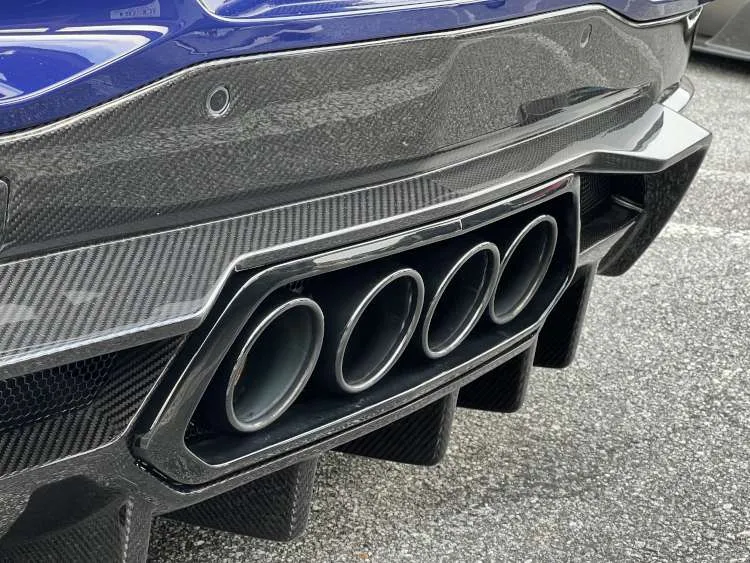
Exhaust Rocket Thrust & Quad-Pipe Gas Velocity
At the 233-mph performance limit, the C8 ZR1 moves beyond traditional mechanical propulsion and begins to utilize the mass-flow rate of its combustion gases as a secondary thrust vector. This phenomenon, often termed Exhaust Gas Thrust, harvests waste kinetic energy from the quad-exit exhaust system to provide a supplemental propulsive assist.
The 6th-Gear Over-Rev Strategy
The LT7 engine’s dominance at the “Aero Wall” is enabled by a specialized calibration within the electronic control unit (ECU). During V-Max testing, the ECU permits a targeted over-rev to 8,100 RPM specifically in 6th gear.
This increases the exhaust gas frequency and velocity precisely when aerodynamic drag is at its peak, using the high-velocity discharge to help maintain positive acceleration.
Thrust Horsepower (THP) and Momentum Flux
In high-velocity fluid mechanics, the force generated by the exhaust is a function of the gas’s exit velocity and mass. While tire-to-asphalt traction remains the primary driver, the supplemental Momentum Flux generated by the quad-pipes provides a critical edge.
At speeds exceeding 230 mph, even a modest thrust vector translates into significant Thrust Horsepower (THP), acting as a “pusher” that helps the chassis sustain its trajectory against the exponential rise in air resistance.

Technical Summary: The Generational Audit
| Metric | 2009 ZR1 (LS9) | 2026 ZR1 (LT7) | Engineering Significance |
| Coolant Volume | ~12.5 Quarts | ~26.0+ Quarts | 108% increase in thermal mass/inertia. |
| Exchanger Count | 5 Units | 15 Units | 200% increase in surface area for rejection. |
| Pump Logic | Mechanical (Belt) | Digital PWM Electric | Decouples cooling flow from engine RPM. |
| Heat Extraction | Passive Hood Vents | Split-Window Vortex Scavenging | Aerodynamic low-pressure heat removal. |
| Propulsion | Crankshaft Only | Propulsive Exhaust Thrust | Secondary assist to overcome the “Aero Wall.” |
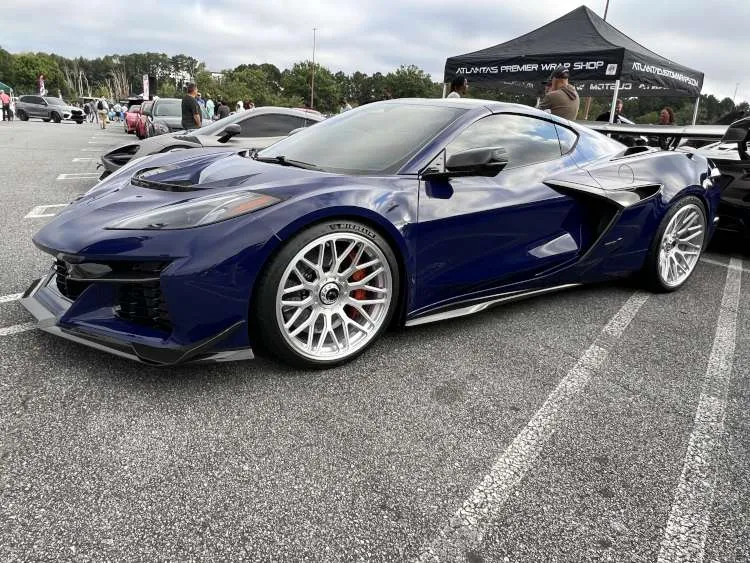
Technical Verdict: Form Follows Flow
The 2026 ZR1 represents the peak of ICE thermal engineering. It is a car that refuses to compromise, utilizing every square inch of its mid-engine architecture to fight the inevitable rise of heat.
By treating cooling as an orchestral arrangement of metallurgy, aerodynamics, and predictive software, Chevrolet has ensured that the “King of the Hill” maintains its throne.
Archival Metadata:
Technical Supplement Taxonomy (LCSH): Computational fluid dynamics | Aerodynamics, Automotive | Heat exchangers—Design and construction | Microfluidics—Automotive applications | Thermodynamics | Control systems—Automotive
Technical Standard: Verified to JSON-LD Schema.org FAQ standards. ISSN 3071-3099 (Online) | Official Selection: U.S. Library of Congress Web Archives (ID 50193) | Master Technical Index.
Non-Affiliation:
Vettes of Atlanta Magazine LLC is an independent publication. This engineering audit is a historical and technical record and is not an official supplement to the General Motors Service Manual.
Secure Your Weekly Briefing
Join a global community of Corvette stewards. Access forensic deep-dives and high-octane field records—delivered with total editorial independence.
START YOUR BRIEFING