

Key Takeaways: 1998 Corvette Indy 500 Pace Car
The 1998 Corvette Indy 500 Pace Car stands as a high-water mark for the C5 generation, blending unapologetic aesthetics with “clean-sheet” engineering. For collectors and enthusiasts, these are the essential insights:
- Market Value: While average examples hover around $20,000, pristine low-mileage survivors (like the 10,000-mile “time capsule” featured) have seen auction prices soar to nearly $50,000.
- Revolutionary LS1 Power: The introduction of the all-aluminum 5.7-liter LS1 V8 delivered 345 hp and 350 lb-ft of torque, offering a rare 1:1 mechanical match between the track pace car and the 1,163 units produced for the public.
- Groundbreaking Tech: It debuted the JL4 Active Handling System, a precursor to modern stability control, featuring a unique “competitive driving mode” for enthusiasts.
- Bold Visual Identity: Defined by its “Radar Blue” (Pace Car Purple) paint, neon yellow wheels, and a striking yellow-and-black interior designed to “grab people immediately.”
Pivotal Moment
More than just a car, the 1998 Corvette Indy 500 Pace Car is a rolling piece of history.
It’s a testament to a pivotal moment in both Chevrolet’s legacy and the iconic Indianapolis 500.
This particular model, a time capsule with just over 10,000 miles on the odometer, tells a story of innovation, daring design, and a last-minute change of pace that added to its legend.
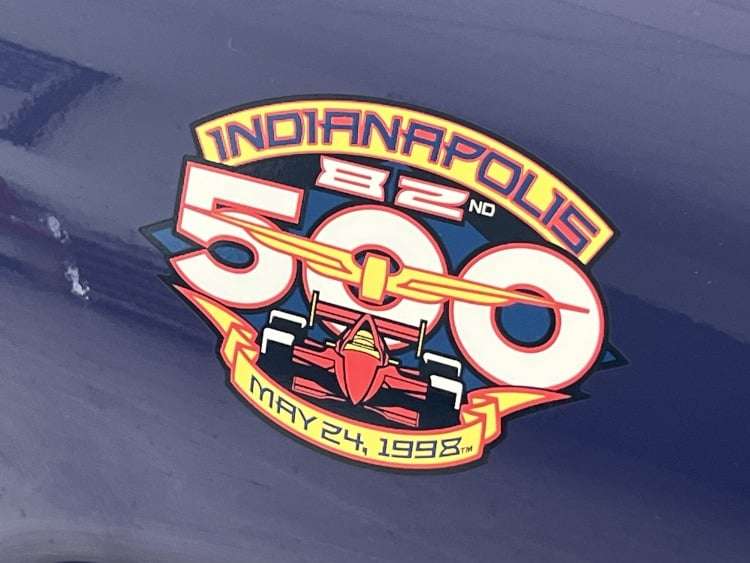
When the green flag waved on May 24, 1998, a new generation of Corvette took the lead. The C5, which had just debuted the year before, was not just pacing a race; it was setting a new standard for American sports cars.
This article dives into what makes this specific car so special, from its bold colors to the cutting-edge technology that was ahead of its time.
We’ll explore the details that make it a collector’s dream and a conversation starter, all while understanding its place in the pantheon of automotive greatness.
Also, for those who want to know more about the fifth generation of America’s Sports Car, we have put together: C5 Corvette Deep Dive: The Modern Comeback
The Bold Design That Stole the Show

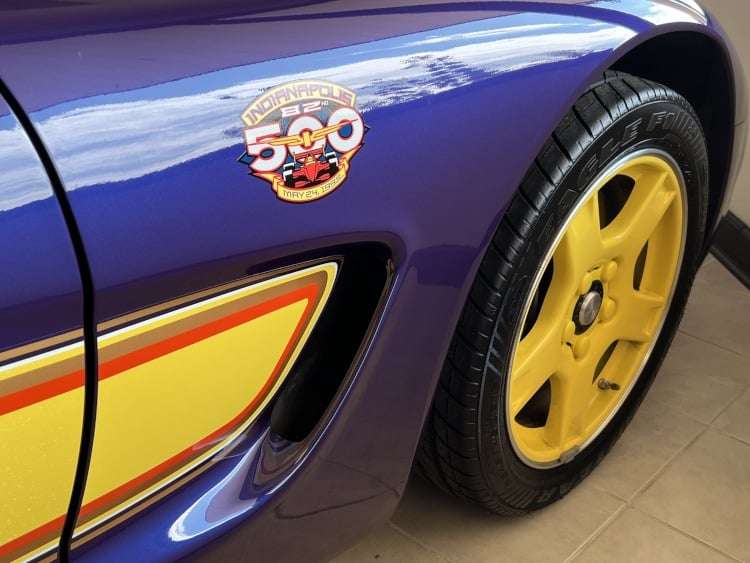
You couldn’t miss the 1998 Corvette Pace Car. It was designed to grab your attention, and it did so with an unapologetic level of boldness.
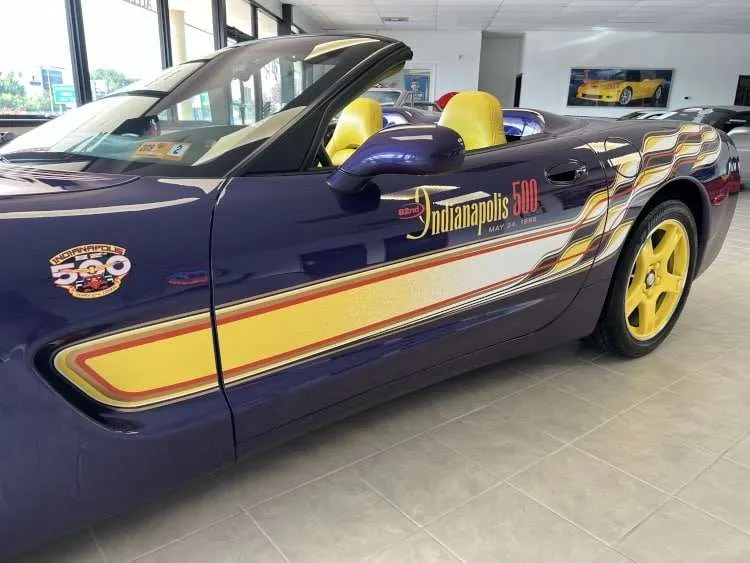
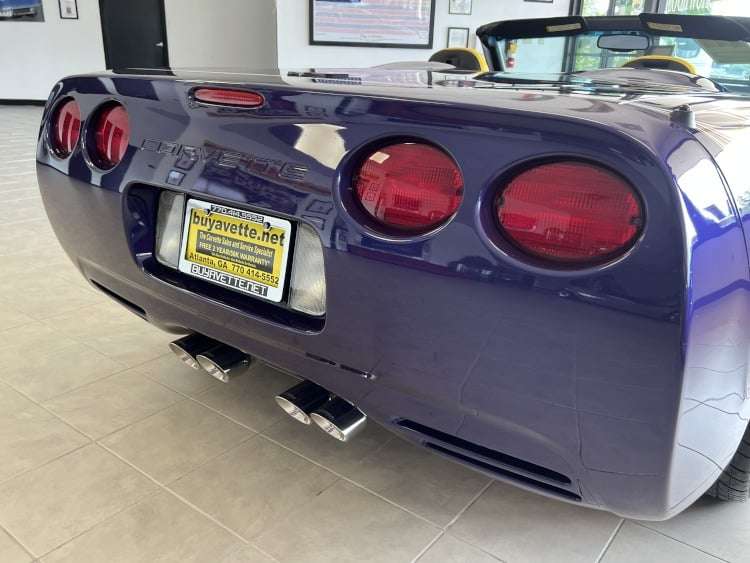
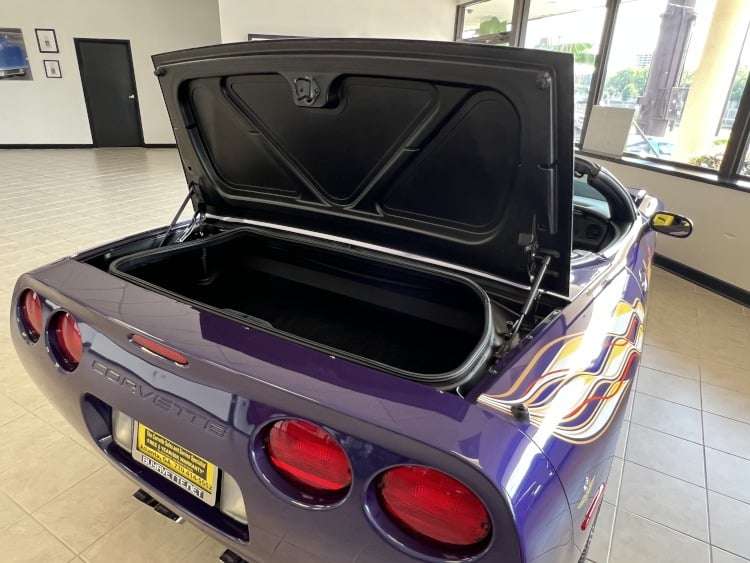
Its exterior, officially known as “Pace Car Purple Metallic” but also referred to as Radar Blue, was a deep, rich shade that provided the perfect canvas for the vibrant graphics. This wasn’t just a simple paint job; it was a full-on statement.
The striking yellow graphics package, complete with a checkered flag motif that flowed along the sides and over the tail, was a visual masterpiece. It perfectly complemented the car’s aggressive lines and hinted at the speed it held in reserve.
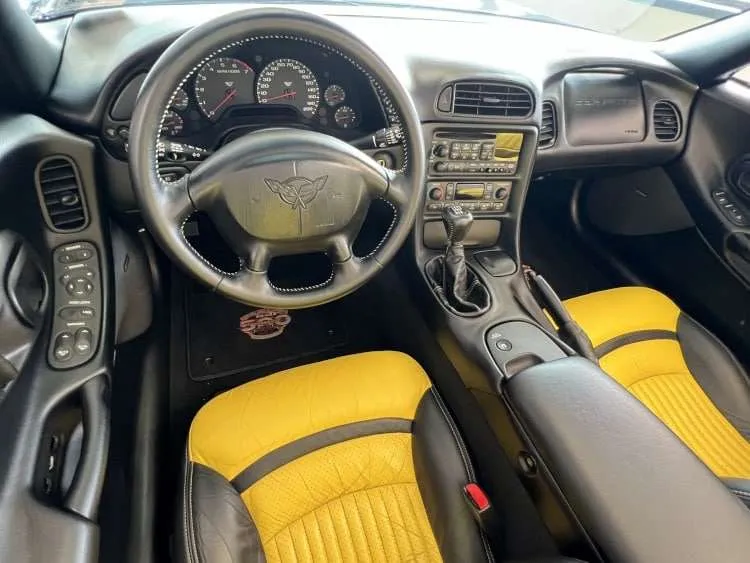
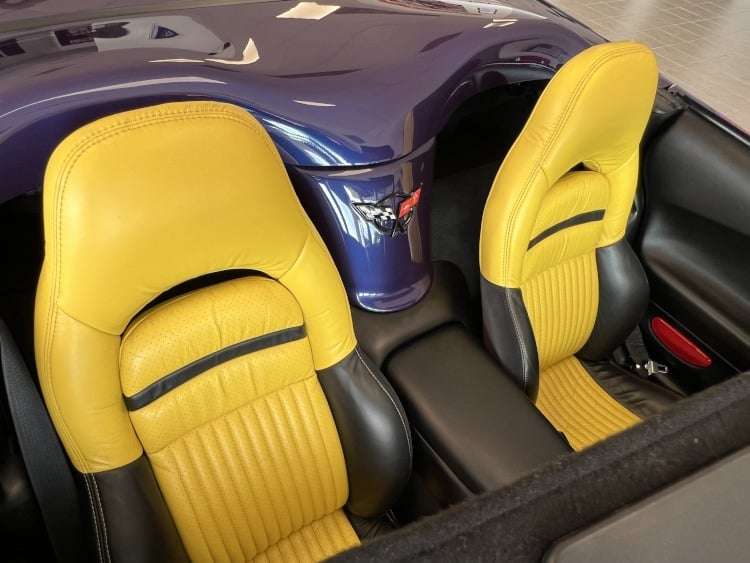
But the design didn’t stop there. The bright yellow wheels and the equally eye-catching yellow-and-black two-tone leather interior created a cohesive and unforgettable look.
As John Middlebrook, a GM vice president, put it. They wanted something that would “grab people immediately,” and the designers certainly delivered. This wasn’t a car for the shy; it was for those who wanted to stand out, and it succeeded wildly.
Under the Hood: The LS1 Revolution


While its looks were certainly a major part of its appeal, the heart of the 1998 Corvette Pace Car was its incredible performance. The C5 generation introduced the legendary LS1 engine, a clean-sheet design that marked a new era for Chevrolet’s V8 power plants.
This all-aluminum, 5.7-liter engine was a marvel of modern engineering, sharing only its 4.4-inch bore spacing with its small-block predecessors.
The LS1 produced a robust 345 horsepower at 5600 rpm and 350 lb-ft of torque at 4400 rpm.
This was more than enough power to handle the pacing duties without any modifications, meaning the replica cars sold to the public were mechanically identical to the actual pace car.
This commitment to authenticity is a significant part of what makes these cars so desirable. The LS1’s higher torque curve and efficient design provided not only exhilarating performance, but also impressive fuel economy for a sports car, rated at 17 City / 25 Highway MPG.
This blend of brute force and efficiency redefined what a sports car could be.
The Active Handling System: Safety Meets Performance

In 1998, Chevrolet introduced a game-changing technology that set the Corvette apart from its competitors: the Active Handling chassis control system (JL4).
This wasn’t just a fancy feature; it was a major leap forward in automotive safety and control. The system used a suite of advanced sensors—including a yaw sensor, steering angle sensor, and lateral accelerometer—to monitor the car’s movements in real time.
If the system detected a loss of control, such as excessive understeer or oversteer, it would selectively apply individual wheel braking to help stabilize the car and pull it back into line.
Chevrolet’s press release even used the analogy of steering a canoe to explain the concept. This level of responsiveness and control was groundbreaking.
What’s more, the system included a “competitive driving mode” that allowed skilled drivers to turn off traction control for events like autocross, a feature that no other similar system offered at the time.
This dual-purpose design—enhancing safety for everyday driving while providing flexibility for high-performance use—solidified the Corvette’s reputation as a leader in automotive technology.
A Rare Bird: Production Numbers and Legacy
The story of the 1998 Indy 500 Pace Car is not complete without mentioning the man who drove it. Originally, golf legend Greg Norman was slated to drive the pace car. He even participated in testing runs early in the spring.
However, an unexpected shoulder surgery forced him to withdraw from the duty at the last minute.
Stepping in to fill the role was a true racing icon: Parnelli Jones. A former Indy 500 winner and a member of the Motorsports Hall of Fame, Jones was a perfect choice for the job.
His last-minute substitution added a unique and memorable chapter to the car’s history. It’s a reminder that even the best-laid plans can change, and sometimes, those changes create an even more compelling story.
The car, with its bold design and powerful performance, was the star, but it was the unexpected driver who added a layer of human interest to its narrative.
A True People-First Car: Features and Comfort
Beyond its performance and rarity, the 1998 Corvette Pace Car was also a comfortable and user-friendly vehicle. The C5 generation was specifically designed to improve on the livability of its predecessor.
This particular car, with its 10,137 miles on the odometer, is a testament to its enduring quality and appeal. It comes loaded with features that were top-of-the-line for their time, making it an enjoyable car to drive every day.
The Pace Car Option Package (Z4Z) included a number of highly desirable additions. Inside, you’ll find:
- Dual-power leather adjustable sport bucket seats
- Dual-zone electronic climate control
- Memory package for driver convenience
- A Bose CD stereo system custom-designed for the Corvette, providing rich, high-quality audio
- And an electronic-tuned AM/FM radio with speed-compensated volume control.
All of these details, from the thoughtful interior design to the high-quality sound system, make this car a pleasure to own and drive.
Driving a Legend: What’s a 1998 Corvette Pace Car Worth Today?
Every time I see a 1998 Corvette Pace Car, I’m reminded of that vibrant, memorable moment when a new Corvette was introduced to the world.
As an enthusiast, the first question that pops into my head is always, “What’s this special edition really worth?” We’ve seen that the price can vary as much as its original owner’s passion, but we’ve also seen a fascinating trend in the market.
A well-maintained example with average mileage typically sells for around $20,000, which is a fantastic value for a piece of Corvette history. However, for a pristine, low-mileage car, the value can climb significantly.
We’ve seen recent auction sales soar as high as $49,500 for a top-tier example. The real key to a higher value is finding a car in exceptional original condition, especially if it has a manual transmission.
For example, a low-mileage car with just 6,000 miles was recently listed for $39,000 at Hagerty. On the other hand, we’ve seen cars with higher mileage or a few modifications sell for as low as $13,750.
Ultimately, a 1998 Corvette Pace Car with a well-documented history is always a smart investment. It’s a fantastic entry point into the world of special edition Corvettes, offering a unique blend of heritage and modern performance.
Why This Pace Car Is So Special
The 1998 Corvette Indy 500 Pace Car is more than just a car with a special paint job; it’s a complete package that represents the pinnacle of C5 engineering and design at the time.
It combines visual flair with a potent and reliable powertrain, and it was a showcase for groundbreaking technology like the Active Handling system.
This particular example, a six-speed manual convertible with incredibly low mileage, is an exceptionally rare find and a highly sought-after collectible.
For the discerning enthusiast, this car represents a unique opportunity to own a tangible piece of history—a vehicle that not only paced the greatest race in motorsports but also helped define a generation of American sports cars.
It’s a testament to the fact that sometimes, the best cars are the ones that are both fast and unforgettable.
Archival Metadata: Primary Record
- Taxonomy (LCSH): Corvette automobile–History | Automobiles–Maintenance and repair
- Technical Standard: Forensic audit of LS1 (Gen III V8) architecture and JL4 Active Handling protocols.
- ISSN 3071-3099 (Online) | Official Selection: U.S. Library of Congress Web Archives (ID 50193) | Master Technical Index
Special thanks to Buyavette, in Atlanta, for letting us photograph this stunning Corvette.
Looking for a Deep Dive?
We recommend, Corvette Generations: A Deep Dive into an American Icon for those wanting to know more about Corvette design philosophy, engineering breakthroughs, and cultural impact that shaped each generation of the Corvette. From fiberglass-bodied beginnings to its modern mid-engine architecture.
Secure Your Weekly Briefing
Join a global community of Corvette stewards. Access forensic deep-dives and high-octane field records—delivered with total editorial independence.
START YOUR BRIEFING