

Forget the 1983 model year—it was the ghost in the machine! When the all-new C4 finally blasted onto the scene in 1984, it wasn’t just a car launch; it was a full-scale declaration that America was serious about sports cars again.
Engineered with a ruthless focus on “Form Follows Function,” this Vette was a technological bombshell.
We got the revolutionary uniframe chassis, ultra-modern fiberglass monoleaf springs, and that magnificent, massive frameless glass rear hatch that was the largest piece of compound glass on any domestic car.
Chevrolet delivered a car that handled like nothing before it, achieving a stunning 0.90g skidpad figure right out of the box!
Yes, it had its notorious quirks—we all remember the underwhelming Cross-Fire L83 V8 (affectionately nicknamed “Cease-Fire”).
Who could forget the temperamental digital dash? This mix of futuristic brilliance and first-year flaws makes the 1984 Corvette a pivotal, powerful, and truly collectible artifact of the digital performance age!
Also, for those who want to know more about the fourth generation of America’s Sports Car, we have put together: C4 Corvette Deep Dive: The Digital Era.

1984: The Digital Dawn and the Cross-Fire Blunder
The 1984 model year didn’t just launch a new Corvette; it launched a revolution.
Skipping the 1983 model year entirely due to extensive quality control delays, the C4 debuted with an exceptionally long production run (starting March 1983). This lead to the second-highest single-year sales figure in Corvette history at 51,547 units.
This Vette was engineered under the mantra of “Form Follows Function,” prioritizing handling and aerodynamics over the C3’s sensual curves.
It was a technological leap, featuring a uniframe chassis, lightweight fiberglass monoleaf springs in the suspension, and a massive frameless glass rear hatch. The results was th largest piece of compound glass on an American production car at the time.
Yet, for all its futuristic brilliance, the 1984 model was notoriously hampered by two crucial, underdeveloped technologies: the Cross-Fire Injection V8 and the complex digital dashboard.
The 205-hp L83 engine, a direct carryover from the 1982 C3, was widely criticized as underwhelming for such an advanced chassis. This earned the 84′ the moniker “Cease-Fire” due to its unreliability and performance flat spots above 4,000 RPM.
This mix of groundbreaking design and frustrating flaws makes the 1984 Corvette a pivotal, challenging, and highly collectible artifact of the Digital Era.

1984 Corvette Model Year FAQs
What was the total production number for the 1984 Corvette?
- The 1984 Corvette had a total production run of 51,547 units, which was the second-highest sales year in Corvette history at that time. This high number was partly due to the model year starting early (March 1983) and running longer than normal.
Why was the 1983 model year skipped?
- The 1983 model year was skipped because the completely redesigned C4 platform experienced quality and build issues that delayed its production. Chevrolet chose to hold the car until the 1984 model year rather than release a flawed product.
What was the major design philosophy of the new C4 chassis?
- The main design goal of the new C4 platform, led by Chief Engineer Dave McLellan, was handling and performance. This focus resulted in the base car achieving a groundbreaking 0.90 g lateral acceleration on the skidpad.
What was the horsepower of the 1984 Cross-Fire Injection engine?
- The 1984 Corvette was powered by the L83 5.7-liter V8 with Cross-Fire Injection, producing 205 horsepower at 4,200 RPM and 290 lb-ft of torque at 2,800 RPM.
Why did the Cross-Fire Injection system gain a poor reputation?
- The system gained a poor reputation because its heavily restricted intake manifold limited airflow, causing the engine to feel choked above 4,000 RPM. It was prone to vacuum leaks, rough idling, and general unreliability, leading to the nickname “Cease-Fire Injection.”
What was unique about the 1984 Corvette’s new suspension?
- The C4 introduced a highly advanced, fully independent suspension system that replaced traditional coil springs with a single fiberglass composite monoleaf transverse spring in both the front and rear. This contributed significantly to the car’s handling prowess.
What piece of exterior glass set a record in 1984?
- The frameless glass rear hatch was the largest single piece of compound glass on any American production car at the time. This design provided excellent cargo access and structural rigidity without a vertical T-bar.
How did the C4’s design improve serviceability?
- The car introduced a full-tilting clamshell hood that opened entirely forward, giving mechanics unobstructed access to the engine and front suspension components.
What notable transmission was offered, and when did it become available?
- The C4 offered the unique Doug Nash 4+3 manual transmission as a no-cost option. However, it was not available for customer delivery until early January of 1984, several months after the automatic version went on sale.
What was the most significant interior technology introduced in 1984?
- The most significant interior technology was the fully electronic digital dashboard (LCD instrument cluster) that displayed speed, RPM, and vital engine conditions in either English or metric units.
What were the two most popular options ordered by customers?
- The two most popular options were Cruise Control (RPO K34, 96.7%) and Power Door Locks (RPO AU3, 96.1%), showing a strong preference for convenience features.
What was the rarest option ordered in 1984?
- The rarest option was the Radio Delete (RPO UL5), with only 104 units produced (0.2% of production).
What was the most popular exterior paint color?
- The most popular exterior color was Bright Red, accounting for 25.1% of all cars built (12,942 units).
Which high-performance package was heavily criticized for its harshness?
- The Z51 Performance Handling Package (RPO Z51, 50.4% take-rate) was praised for achieving 0.95g lateral acceleration, but was widely criticized by owners for its overly stiff and harsh ride on normal roads.
What was the wheel size setup for the optional Z51 package?
- The Z51 package featured a staggered wheel setup with 16-inch x 8.5-inch wheels in the front and 16-inch x 9.5-inch wheels in the rear.
Which optional stereo system was factory-installed and unique to the Corvette?
- The Delco Bose Stereo System (RPO UU8, 84.6% take-rate) was a unique, 5-unit sound system engineered specifically for the C4’s cabin acoustics and had to be installed at the factory.
Where was the Corvette manufactured?
- All 1984 Corvettes were produced at the Bowling Green, Kentucky factory.
What was a common design outcome stemming from the pursuit of chassis stiffness?
- The car featured unusually high and wide door sills that were integral to the uniframe chassis for increased rigidity, requiring occupants to climb over them for entry and exit.
What was unique about the brake calipers on the 1984 model?
- The car utilized new aluminum calipers made by Girlock of Australia as part of its low-drag, four-wheel disc brake system, which reduced unsprung mass.
What was the weight distribution of the new C4 chassis?
- The new C4 achieved a near-perfect 51% front / 49% rear weight distribution, contributing significantly to its superior handling.
Which optional interior features were the most popular?
- Leather Seats (RPO AR9, and AQ9 Leather Sport Seats) were selected by 78.7% of buyers. The single most popular leather color choice was Carmine Leather (RPO 742,24.8%).
What was the purpose of the manual seatbelt feature in early C4s?
- C4s produced from 1984 through 1989 included a “CINCH” button on the seatbelt buckle, allowing the driver to lock the belt in place during performance driving for better stability.
Which transmission option was the most popular?
- The 4-Speed Automatic Transmission (RPO MX0) was overwhelmingly the most popular choice, accounting for 87.5% of sales.
1984: The Digital Dawn and the Cross-Fire Blunder
Despite the initial performance frustrations caused by the Cross-Fire V8 and the frustrating reliability of the early digital systems, the 1984 Corvette remains one of the most historically significant cars of the entire lineage.
It was the necessary leap that brought the Corvette into the modern era, pioneering the uniframe structure, fiberglass monoleaf suspension, and sophisticated aerodynamics that became the foundation for the next two decades of Corvette excellence.
Though the engine was quickly abandoned, the chassis proved to be world-class, ensuring the C4’s place not just as a problematic footnote, but as a pivotal chapter in American sports car engineering.

1985: The Redemption of the C4 and the Rise of the L98
The 1985 model year marked the C4 Corvette’s official coming of age.
After the highly criticized L83 Cross-Fire engine of 1984, Chevrolet listened to the backlash and introduced the legendary L98 5.7-liter V8 with Tuned-Port Injection (TPI).
This single change transformed the Corvette from a flawed technological experiment into a world-class sports car. Output was boosted to a robust 230 hp and 330 lb-ft of torque.
This gave the car a claimed top speed of over 150 mph. Earning it the title of “The Fastest Car in America” from critics.
Engineers also addressed the other major complaint about the 1984 model: the harsh ride.
They softened the spring rates on the standard suspension by over 25% and refined the Z51 package. This made the car more compliant for daily use without sacrificing its sharp handling.
With its sleeker 0.323 coefficient of drag and the reliability of TPI, the 1985 Corvette successfully completed the technological leap that the 1984 model only started. Thus cementing its status as the true performance debut of the C4 generation.

1985 Corvette Model Year FAQs
What was the most significant mechanical upgrade for the 1985 Corvette?
- The most significant upgrade was the replacement of the problematic Cross-Fire Injection system with the new L98 5.7-liter V8 engine featuring Tuned-Port Injection (TPI).
How much did horsepower and torque increase from 1984 to 1985?
- Horsepower increased from 205 hp to 230 hp (a 25 hp gain), and torque jumped from 290 lb-ft to 330 lb-ft (a 40 lb-ft gain).
What was the primary benefit of the Tuned-Port Injection (TPI) system?
- The TPI system used long, tuned intake runners and individual injectors to create a flatter torque curve, resulting in instant throttle response and superior low-end torque compared to Cross-Fire.
What was the reported top speed and 0 to 60 mph time for the 1985 model?
- The 1985 Corvette had a top speed of over 150 mph and could achieve 0 to 60 mph in a swift 5.7 seconds with the manual transmission.
How did engineers address the harsh ride of the 1984 model?
- Engineers softened the spring rates on the standard suspension by approximately 25% in the front and rear. This provided a more compliant and comfortable ride without diminishing the car’s handling prowess.
What was the specific wheel setup for the optional Z51 Performance Handling Package?
- The Z51 package maintained the staggered wheel setup with 16-inch x 8.5-inch wheels in the front and 16-inch x 9.5-inch wheels in the rear (the wider rear wheel was standard on the Z51 package).
Did the controversial 4+3 manual transmission remain an option?
- Yes, the complex Doug Nash 4+3 manual transmission with automatic overdrive remained a no-cost optional transmission.
What key control change was made to the 4+3 overdrive system in 1985?
- The manual transmission’s overdrive system received reprogrammed logic that restricted the full-throttle kickdown from overdrive to top gear only, enhancing control and durability during spirited driving.
What was the lowest coefficient of drag achieved by the 1985 C4?
- The 1985 model achieved an improved coefficient of drag (0.323), making it more slippery through the air than its predecessor.
What happened to the digital dashboard in 1985?
- The futuristic digital instrument cluster remained, but the electronic liquid crystal displays were revised with larger, clearer digits and less colorful graphics to improve legibility and address display quality complaints.
What was the most popular exterior paint color for 1985?
- Bright Red was the most popular exterior color, accounting for 26.2% of total production.
How many 1985 Corvettes were produced in total?
- A total of 39,729 units were produced for the 1985 model year.
What specialized suspension components were made available on both the standard and Z51 packages?
- Delco-Bilstein gas-charged shock absorbers were made available, which were precisely tuned to enhance the car’s ride characteristics and control.
What was the primary function of the L98’s long air intake runners?
- The long, tuned runners were designed to promote high flow velocities at lower RPMs, which was key to generating the massive 330 lb-ft of low-end torque the engine was known for.
Which transmission option was the most popular?
- The 4-speed automatic transmission was overwhelmingly the most popular choice, accounting for 75.9% of sales, with the manual only taking 24.1%.
What was the rarest factory option for the 1985 model year?
- The rarest optional equipment was the CB Radio (RPO UN8), with only 162 units produced (0.4% of total production).
What was a major interior convenience upgrade for 1985?
A new option was the Custom Adjustable Sport Seats, which offered power adjustments for the upper side bolsters and lumbar support for enhanced driver comfort and support.
What was the most popular leather interior color?
- Carmine Leather (RPO 742) was the most popular leather interior color, accounting for 20.8% of all interiors.
What exterior feature change was made to the removable roof panel?
- The removable roof panel was changed from fiberglass to a molded-plastic part for reduced weight and improved sound dampening.
What safety feature was standard on the L98 engine to prevent damage from low-octane fuel?
- The L98 featured Electronic Spark Control (ESC) to sense detonation and automatically retard the spark, protecting the engine from low-octane fuel damage.
What detail improvement was made to the frame to increase longevity?
- The steel understructure was 100% galvanized and dip-painted, with extensive use of aluminum alloys and stainless steel to provide comprehensive anti-corrosion protection.
1985: The Redemption of the C4 and the Rise of the L98
The 1985 Corvette earned its reputation as the year the C4 finally got it right.
By replacing the problematic Cross-Fire V8 with the potent and reliable L98 Tuned-Port Injection engine, Chevrolet silenced its critics and delivered a true world-class sports car capable of breaking the 150 mph barrier.
The commitment to correcting the previous year’s flaws—by refining the suspension and enhancing the digital interior—proved the engineering team was dedicated to making the C4 the ultimate expression of American performance technology.
This model year truly represents the beginning of the C4’s legacy as a performance bargain and sets the stage for a triumphant return in 1986.

1986: The Convertible Returns, ABS is Standard, and VATS Debuts
The 1986 model year was defined by a massive leap in safety, security, and open-air driving. Ultimately,maturing the C4 platform into a world-class competitor.
After an eleven-year hiatus since 1975, the highly anticipated Corvette Convertible returned with all 7,315 units designated as Indy 500 Pace Car replicas.
Critically, the 1986 model became the first C4 to include Bosch ABS II anti-lock braking as standard equipment. This dramatically enhancing control and setting a new benchmark for safety.
Engine performance saw a crucial mid-year update. They transition to aluminum cylinder heads on all convertibles and late-production coupes. This slightly increased the L98’s output to 235 hp and reduced overall vehicle weight.
To combat the high theft rate of earlier C4s, Chevrolet also introduced the new VATS (Vehicle Anti-Theft System). It was a key-coding technology that became a hallmark of the C4 generation.
The combination of high-tech safety, security, and the return of the roadster cemented 1986 as a pivotal, highly collectible year.

1986 Corvette Model Year FAQs
What was the most significant feature made standard on the 1986 Corvette?
- The most significant standard feature was the Bosch ABS II anti-lock braking system. This computer-controlled system monitors wheel rotation and prevents lock-up during hard braking, enhancing driver control.
What major body style returned to the Corvette lineup in 1986?
- The Corvette Convertible returned to the lineup after an eleven-year hiatus (the last convertible was in 1975). A total of 7,315 convertibles were produced.
What distinction did all 1986 Corvette convertibles share?
- All 1986 convertibles were designated as Indianapolis 500 Pace Car replicas to commemorate the convertible leading the 70th running of the Indy 500.
What was unique about the graphics on the Indy 500 Pace Car replicas?
- The commemorative graphics (decals) were shipped with the car so the owner or dealer could decide whether or not to apply them. This means many replicas remain decal-free today.
What was the purpose of the new VATS (Vehicle Anti-Theft System)?
- The VATS system (Vehicle Anti-Theft System, or “Pass Key”) used a unique resistor pellet embedded in the ignition key. The car’s computer had to read the correct electrical resistance to enable the starter and fuel system, greatly deterring theft.
How did the L98’s horsepower increase in the 1986 model year?
- The L98’s output increased from 230 hp to 235 hp on models equipped with aluminum cylinder heads and a corresponding compression ratio increase to 9.5:1.
Which models received the new aluminum cylinder heads?
- The lightweight aluminum cylinder heads were introduced mid-year, fitted to all convertibles and late-production coupes. Early coupes retained the cast-iron heads.
What new mandatory exterior safety feature was added for 1986?
The Center High-Mounted Stop Lamp (CHMSL), or third brake light, was added to comply with new federal regulations.
What key transmission detail distinguished the overdrive in 1986?
- The Doug Nash 4+3 manual transmission logic was reprogrammed to automatically engage overdrive upon engine startup. This was done to meet federal fuel economy (EPA) requirements and avoid the gas-guzzler tax.
How many 1986 Corvettes were produced in total?
- A total of 35,109 units were produced, split between 27,794 coupes and 7,315 convertibles.
What was the rarest factory-ordered paint color?
- The rarest exterior color was Copper Metallic, with only 4 units produced (0.0% of production).
What key interior feature that improved driver support was made standard?
- The formerly optional Sport Seats, which featured power-adjustable side bolsters and lumbar support, were made the standard seat.
What was a known, persistent issue with the VATS system for owners?
- While effective against thieves, the VATS system is notoriously prone to electronic failure due to age and wear. A faulty ignition lock sensor or module could cause the car to enter a no-start lockout period, stranding the owner.
What structural detail distinguishes the convertible chassis from the coupe?
- The convertible frame included additional reinforcement, such as an X-brace under the cockpit floor, to maintain structural rigidity after the removal of the fixed roof panel.
What unique special edition was limited to 50 units for the coupe?
- The Malcolm Konner Commemorative Edition was a dealer-sanctioned special model limited to 50 coupes, featuring a unique two-tone Silver Beige over Black paint scheme.
What change was made to the digital instrument cluster to improve usability?
- The digital dashboard was slightly re-angled to reduce daytime glare and improve readability.
Which optional high-performance package included wider wheels on all four corners?
- The Z51 Performance Handling Package (RPO Z51) for the coupe included 16-inch x 9.5-inch wheels on all four corners for maximum tire contact patch.
What exterior feature was redesigned to improve aerodynamics and cooling?
- The fixed headlights were a permanent design change—the first since 1962—influenced by the C4.R race car and designed to improve aerodynamics.
What was the most popular optional stereo system in 1986?
- The custom-engineered Delco Bose Stereo System (RPO UU8) was overwhelmingly popular, with a 92.5% take-rate.
What was the common owner-reported flaw that plagued the later L98 aluminum heads?
- While the weight-saving was substantial, the aluminum heads were sometimes prone to premature valve guide wear and, under high load, cracking, an issue that often requires costly aftermarket corrective repair.
1986: The Return of the Convertible and the Dawn of ABS
The 1986 Corvette successfully achieved its goal of combining technological advancement with renewed driving pleasure.
The reintroduction of the convertible, the implementation of standard ABS, and the introduction of the VATS security system proved that the C4 was maturing into a sophisticated, safety-conscious sports car ready to compete globally.
By integrating the highly efficient TPI engine with these cutting-edge features, the 1986 model solidified the C4’s reputation as a performance powerhouse and the true heir to the Corvette legacy.

1987: The Purist’s Peak and the Dawn of Callaway
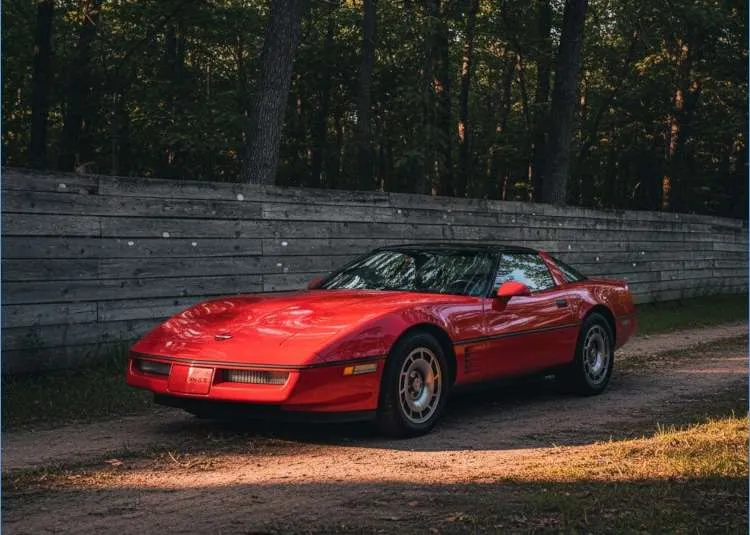
The 1987 Corvette represented the culmination of the C4’s early development. It established the model as an unbeatable track machine while also introducing a new era of factory-backed performance.
Engineers finalized key upgrades to the L98 engine by installing new hydraulic roller valve lifters. This resulted in boosting output to 240 hp and 345 lb-ft of torque.
This refinement cemented the C4’s dominance in the Sports Car Club of America (SCCA) Escort Endurance Series. Unfortunately that lead to the C4’s unprecedented ban from the series after the 1987 season.
For street performance enthusiasts, 1987 is forever defined by the introduction of RPO B2K, the Callaway Twin-Turbo option.
This rare, dealer-ordered package (19,995) saw new Corvettes shipped directly to Callaway Engineering for a twin-turbo setup that generated 345 hp and 465 lb-ft of torque.
With the debut of the refined Z52 Sport Handling Package and continued structural enhancements, the 1987 model became the purist’s choice.
It was a fast, sophisticated bridge to the C4’s high-horsepower future.
1987 Corvette Model Year FAQs
What was the source of the 1987 L98 engine’s power boost?
- The L98 engine received hydraulic roller valve lifters for the first time, contributing to a 10 hp increase, boosting output to 240 hp and torque to 345 lb-ft.
What major competition development occurred after the 1987 racing season?
- The C4 Corvette’s overwhelming dominance in the SCCA Escort Endurance Series between 1985 and 1987 led the SCCA to ban the C4 platform from the series starting in 1988.
What was the B2K option, and what company performed the conversion?
- The B2K option was the Callaway Twin-Turbo package. When ordered through a dealer, the Corvette was shipped to Callaway Engineering in Connecticut for the performance modifications.
How many 1987 Corvettes were built with the Callaway Twin-Turbo option?
- Only 188 Corvettes were produced with the RPO B2K Callaway Twin-Turbo option in 1987.
What was the new, popular handling option introduced in 1987?
- The new Z52 Sport Handling Package was introduced, combining performance components (Bilstein shocks, quick steering) with the softer base suspension for a better ride.
What was the Z51 package restricted to in 1987?
- The high-performance Z51 Performance Handling Package (RPO Z51) was restricted to coupe models with the manual transmission only.
What was the standard wheel setup for the Z52 Sport Handling Package and the Convertible?
- The convertible came standard with the base wheel of 8.5 all around. The 9.5 square setup was the key distinguishing feature for the Z52 and Convertible to handle wider P255/50VR−16 tires.
What component of the 4+3 manual transmission was upgraded for durability?
- The manual transmission included a heavier-duty Dana 44 differential. It featured an 8.5-inch ring gear, which was stronger than the Dana 36 used on automatic models.
Which transmission option was the most popular in 1987?
- The 4-speed automatic transmission was overwhelmingly the most popular, with a 86.0% take-rate.
What electronic feature was nearly launched but pulled due to design flaws?
- An optional Tire Pressure Monitoring System (RPO UJ6) was installed on 46 cars before being pulled from production due to unreliability (false signaling).
What key structural improvements were added to the coupe?
- Coupes ordered with either the Z51 or Z52 package received structural enhancements developed for the convertible (chassis bracing) to increase rigidity.
What was the least popular factory-ordered paint color?
- The rarest exterior color was Dark Orange Metallic (RPO 66U), with only 87 units produced (0.3% of production).
What key interior feature was made standard for the 1987 model?
- The formerly optional Sport Seats, featuring power-adjustable side bolsters and lumbar support, were made the standard seat.
What new convenience options were introduced for the convertible?
- The Power Passenger Seat (RPO AC1) and Electronic Air Conditioning Control (RPO C68) were newly available options for the convertible body style.
What was the MSRP of the base 1987 Corvette Coupe?
- The Manufacturer’s Suggested Retail Price (MSRP) for a base 1987 Corvette Coupe was $27,999.00.
How many 1987 Corvettes were produced in total?
- A total of 30,632 units were produced, with 20,007 coupes and 10,625 convertibles.
What was a common design flaw related to the high door sills?
- The C4’s high side sills, integral to its rigidity, were known to cause premature wear on the driver’s seat bolster and carpet due to the difficulty of entry and exit.
What component’s upgrade was made to the L98 engine to allow for lower viscosity oil?
- The engine received ultra-precise machining and fitting of internal parts to allow for the use of lower viscosity 5W-30 oil, which improved efficiency and reduced parasitic drag.

C4 1984-1987: Foundational, Transition & Successful
The years 1984 through 1987 served as the foundational, transitional, and ultimately successful launch period for the C4 Corvette.
Beginning with the flawed but revolutionary chassis design and the controversial 4+3 manual, the C4 rapidly corrected its initial shortcomings by introducing the reliable L98 Tuned-Port Injection engine, standard ABS, and the essential VATS anti-theft system.
Capped by the official ban from SCCA racing due to its dominance, this era proved the C4 chassis was truly world-class, culminating in the bold, GM-warranted performance of the Callaway Twin-Turbo B2K.
These four years established the C4’s core identity: a high-tech, torque-rich, and globally competitive American sports car.

Bonus – “Designing Corvettes Runs In The Family”
As time passes, it gets harder to find those who helped design the third and fourth generation of Corvette. Getting a chance to talk to those who were there in the General Motors trenches during that time is a rare find.
Even rarer, is getting a chance to sit down and talk with someone whose Dad and two other siblings helped design the iconic C3s and C4s. After talking with Tom for a few minutes, we knew we had to share this generational Corvette family story with you. We encourage you to read ,“Designing Corvettes Runs In The Family.”
Looking for a Deep Dive?
We recommend, Corvette Generations: A Deep Dive into an American Icon for those wanting to know more about Corvette design philosophy, engineering breakthroughs, and cultural impact that shaped each generation of the Corvette. From fiberglass-bodied beginnings to its modern mid-engine architecture.
Fuel Your Passion: Get Our Best Articles Delivered To Your Inbox – Free
Sign up now to receive every new review, tech guide, and event recap directly to your inbox. It’s fast, free, and easy!
SUBSCRIBE NOW