

In the world of classic cars, some vehicles are more than just a means of transport; they are rolling works of art, pieces of history, and a testament to a bygone era of automotive excellence.
Here at Vettes of Atlanta Magazine, we live and breathe this stuff. When a car like the 1958 Corvette crosses our path, we pause to appreciate a true piece of rolling history.
This isn’t just any ’58 ‘Vette; it’s a two-top classic with a story that runs as deep as its gleaming paint. A rolling piece of automotive art that a local collector has cherished for over four decades.
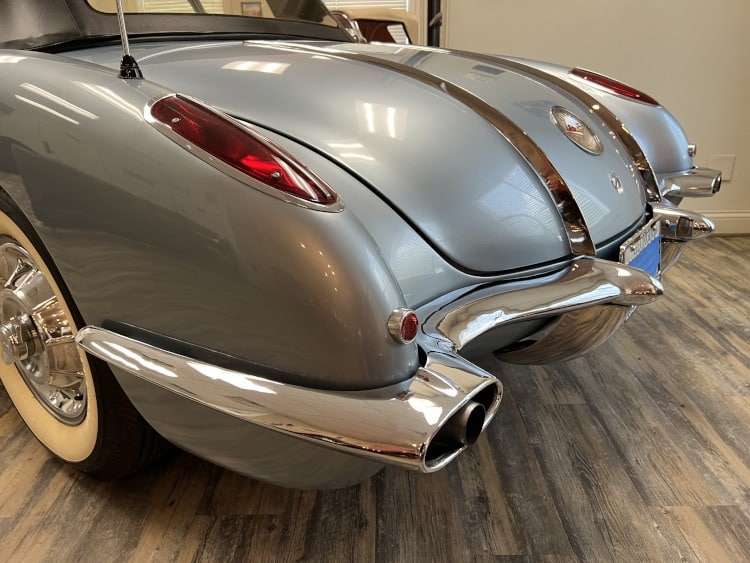
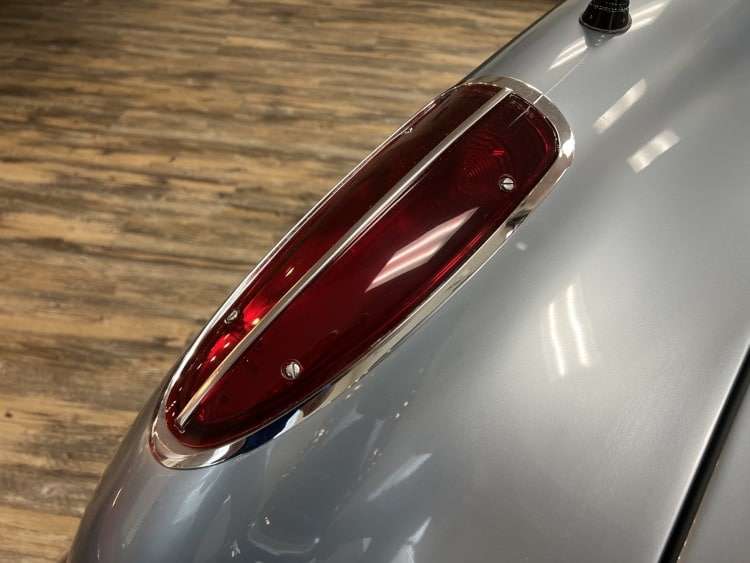
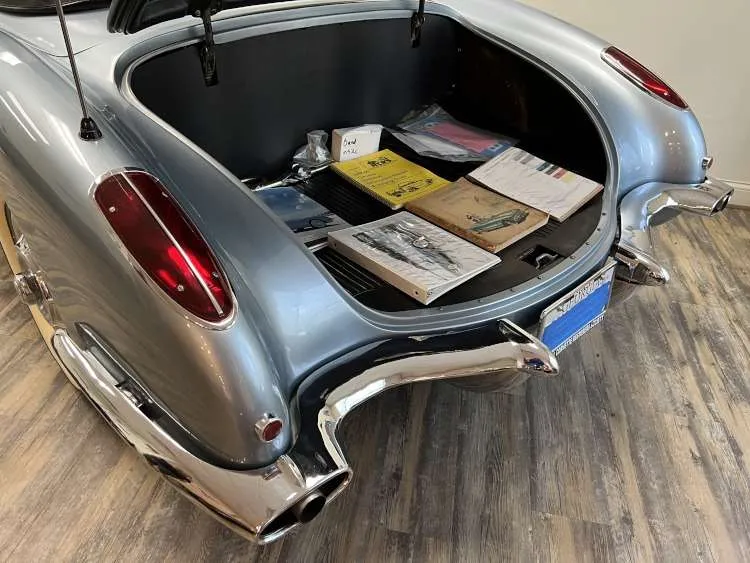
From its iconic “washboard hood” to the distinct stainless strips on the trunk, every detail on this roadster screams authenticity and passion.
It’s a joy to drive, a marvel to behold, and a perfect example of why these classic Corvettes continue to capture our hearts.
And for those curious first generation enthusiasts among us, we recommend C1 Corvette Deep Dive: The Genesis of an American Icon.

A Defining Moment for the Corvette: The 1958 Redesign
The 1958 Corvette marked a significant restyling for the C1 generation, introducing several new design features. Key changes included:
- A redesigned front end with the first-ever quad-headlight configuration.
- A unique “washboard” hood with faux louvers.
- A new dashboard layout with all gauges positioned directly in front of the driver.
- A revised trunk lid with twin chrome “suspenders.”
- Increased use of chrome accents, including prominent bezels around the headlights.
Stepping back in time to 1958, the Corvette was ready for a major change. Up until this point, the C1 had been steadily evolving, but this year was a dramatic break from the past.
Chevrolet gave the car a powerful new look that was unmistakably a product of the late 1950s. The most noticeable change was the iconic quad-headlight setup. This was a first for the Corvette and a bold statement of its place in the American automotive landscape.
As an enthusiast, we’ve always appreciated how the ’58 model is so easy to spot from a distance. Visually you can’t miss that unique “washboard hood “with its faux louvers. Nor the bold chrome spears on the trunk lid.
It was all part of the “more is more” design philosophy of the era. Inside, designers created a cockpit that was more driver-focused than ever before.
For the first time, all the gauges were grouped together in front of the steering wheel. There was also a passenger grab bar and factory-installed seat belts were standard features—a nod to both style and safety.
This model year was not just a refresh; it was a total reimagining that cemented the Corvette’s status as America’s premier sports car.

The Heart and Soul: A Deep Dive into the 1958 Powertrain
In 1958, Chevrolet powered all Corvettes with a 283-cubic-inch V8 engine, and buyers could choose from five different power ratings. Chevrolet offered these engines with either a 4-barrel carburetor, dual 4-barrel carburetors, or Rochester Ramjet fuel injection. The available engine options produced between 230 and 290 horsepower.
Horsepower, Compression & Torque Options
- 4-barrel carburetor – 230 hp @ 4,800 rpm with 9.5:1 compression producing 300 lb-ft of torque @ 3,000 rpm.
- Dual 4-barrel carburetors – 245 hp @ 5,000 rpm with 9.5:1 compression producing 300 lb-ft of torque @ 3,800 rpm.
- Dual 4-barrel carburetors with special cam – 270 hp @ 6,000 rpm with 9.5:1 compression producing 285 lb-ft of torque @ 4,200 rpm.
- Fuel Injection – 250 hp @ 5,000 rpm with 9.5:1 compression producing 305 lb-ft of torque @ 3,800 rpm.
- Fuel Injection with special cam – 290 hp @ 6,200 rpm with 10.5:1 compression producing 290 lb-ft of torque @ 4,400 rpm.
The power behind the 1958 Corvette was the legendary 283 cubic-inch V8 engine, which was the very core of its sports car spirit. We can’t stress enough how significant this engine was.
It was a major achievement for its time.. For it was the world’s first mass-produced engine to make more than one horsepower for each cubic inch of piston displacement. A goal no one had achieved until then.
Chevrolet offered this powerplant in a variety of configurations to suit every type of driver, from the daily cruiser to the serious racer. The base engine was a 230 hp V8 with a single 4-barrel carburetor. But for those seeking more, things got interesting with the optional versions.
Buyers could choose from a 245 hp or 270 hp version with twin 4-barrel carburetors for a classic performance look and feel. The true legends, however, were the “fuelie” engines equipped with Rochester Ramjet fuel injection.
These were a “motoring first” for Chevrolet, giving drivers instantaneous throttle response and better fuel efficiency.
The top-tier 290 hp “fuelie” with a special camshaft and a high 10.5:1 compression ratio was a true monster on the street, cementing the Corvette’s racing credentials.
The Chassis and Suspension: A Foundation for Performance
For the 1958 Corvette, Chevrolet built the car on a box-girder frame with X-member reinforcement. They gave it independent coil springs in the front and a solid axle with semi-elliptic leaf springs in the rear. An 11-inch hydraulic drum brake system on all four wheels provided the stopping power.
Transmission options included a 3-speed manual (standard), a 4-speed manual (optional), and a 2-speed Powerglide automatic (optional).
Component & Description
- Frame – Box-girder with X-member reinforcement.
- Suspension – Independent coil springs in the front and a solid axle with semi-elliptic leaf springs in the rear.
- Brakes – 11-inch hydraulic drums on all four wheels.
- Rear Axle – Semi-floating hypoid with a 3.70:1 ratio for manual transmissions or 3.55:1 for Powerglide.
- Tires – Black 6.70 x 15 tubeless tires (standard).
They say a sports car is only as good as the foundation it’s built on, and the 1958 Corvette was built on a strong one. Its chassis was a robust box-girder frame. When combined with the X-member reinforcement, made the car feel incredibly solid on the road.
The suspension, with its independent coil springs up front and semi-elliptic leaf springs in the back, provided a stable and confident feel that was well-suited for both spirited driving and comfortable cruising.
For those of us who appreciate the rare and unique, the Heavy Duty Brakes and Suspension package (RPO 684) is a fascinating piece of history. Though not equipped on this car, it was a competition-focused option that included special brakes and a stiffer suspension.
It was so aggressive that the cars came with a placard that said, “This car is not for street use.” Only 144 of these were produced, and finding a car with this option today is a true discovery.
It’s details like these that truly tell the story of the Corvette’s dual purpose as both a stylish cruiser and a legitimate performance machine.
Production, Pricing, and a Piece of History
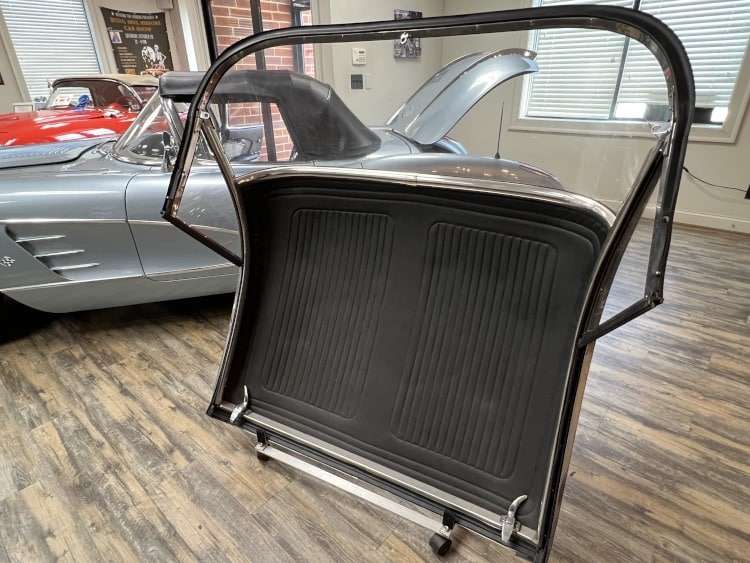
Chevrolet produced 9,168 units of the 1958 Corvette at the St. Louis, Missouri assembly plant. The base price for the car was $3,631. All models were convertibles, though a removable auxiliary hardtop was an available option.
So, when we talk about classic cars, the numbers tell a story, but it’s the human context that brings it to life. The 1958 model year was a strong one for the Corvette, with a total of 9,168 units produced.
While that might not seem like a lot by today’s standards, it was a significant leap forward in production numbers for the young sports car.
It was clear that the Corvette had found its stride and its market. The base price of $3,631 was a lot of money in 1958, putting the Corvette out of reach for many, solidifying its status as a premium, aspirational vehicle.
What’s interesting about this year is that while every car was a convertible, the auxiliary hardtop was a popular option. It truly gave the car two distinct looks, transforming it from a sleek roadster to a more enclosed grand tourer.
These numbers represent more than just cars; they represent 9,168 individual decisions by people who wanted to own a piece of the American dream.
A Canvas of Color: 1958 Corvette Paint and Interior Options
The 1958 Corvette was available in eight single-color acrylic lacquer paint options and a two-tone combination with a contrasting color on the side coves. The most popular exterior colors were:
- Snowcrest White (2,477 units)
- Silver Blue (2,006 units)
- Signet Red (1,399 units)
The interior was offered in Charcoal, Blue-Grey, and Red.
For sure, one of the most enjoyable aspects of the Corvette is the vast range of colors and options. For the 1958 model, buyers could choose from a palette of eight single colors, from the classic Tuxedo Black to the stunning Regal Turquoise.
What always interested me as a lifelong fan is how color choices reflect the cultural moment. The 1950s were a time of post-war optimism and prosperity, and the cheerful, brighter colors of the Corvette reflected that societal exuberance.
It’s no surprise that Snowcrest White was the most popular color. White has been a top seller for the Corvette since the very first 1953 model and is a clean, classic, and high-contrast color that appeals to a broad audience.
Our featured car, a Silver Blue example, was the second most popular choice, with over 2,000 units produced. It’s a beautiful metallic hue that really makes the car’s lines pop.
The interior options were limited but classic, with choices of Charcoal, Blue-Grey, or Red, often complementing the exterior perfectly. This was a car that allowed its owner to make a statement, and color was a big part of that.

The Iconic Two-Tone Coves: A Styling Masterpiece
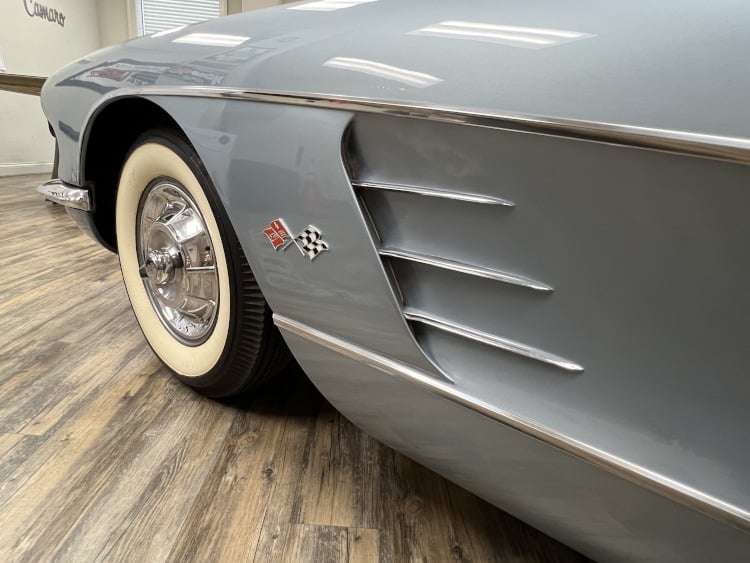
The 1958 Corvette offered an optional two-tone paint scheme that applied a contrasting color to the indented side coves. This feature was an evolution of the design from 1956 and 1957, with the 1958 model adding a new front panel and three chrome spears within the cove.
The two-tone paint was a manual application process, often resulting in subtle imperfections that are unique to each car.
Clearly, if there is one single styling feature that screams “1958 Corvette,” it’s those iconic two-tone coves. This was a design that was first introduced in 1956, but for the ’58 model, it was perfected with a new front panel and those eye-catching three chrome spears.
When you see a car with the contrasting paint on the coves, your eye is immediately drawn to that area. It serves both a functional and stylistic purpose, accentuating the unique shape of the side coves and creating a strong visual line along the side of the car.
What’s fascinating to us is the low-tech, manual process used to apply this paint. The stainless steel trim was installed first and used as a mask, meaning the contrasting paint was hand-sprayed up to its edge.
This often resulted in subtle bleeding or soft lines, rather than a perfectly crisp separation. These minor imperfections are a beautiful part of the car’s story.
They are a sign of its originality, a testament to the hands that built it, and a detail that serious collectors always look for.
Navigating the Market: What a 1958 Corvette is Worth Today?
The market value of a 1958 Corvette varies significantly based on its condition and originality. According to Hagerty, an average-condition example is valued at approximately $95,000 for one with low mileage, options, good condition, and provenance.
Stepping up to concours-quality, highly original car can command upwards of $120,000 or more. The highest selling price we’ve found of a 1958 Chevrolet Corvette at auction over the past few years was $660,000.
Project cars or those in need of significant restoration can be found for under $50,000. Key factors influencing value include provenance, documentation, matching numbers, and rare factory options.
Every time we walk into a showroom and see a 1958 Corvette, we’re reminded of a time when the Corvette truly began to flex its muscle and showcase its iconic style. As an enthusiast, the first thing I wonder is, “What’s this beauty worth?”
It’s a question with a lot of answers, because the price of a 1958 Vette is as unique as the car itself.
As the numbers suggest, there’s a wide range. A beautifully restored car that’s a perfect driver can fetch a solid price, but the cars that truly climb the market charts are those with a documented history.
Was it a highly-optioned car with a rare engine? Was it a “matching numbers” car with a documented past? A 4-speed manual transmission or the presence of the original Dual Quad carbs can add a significant premium.
A true collector will always pay more for a car with a well-documented past, as it offers a piece of history and a sense of trust. Whether you’re a buyer or a seller, it’s about finding that perfect balance between a car’s story and its market value.
Frequently Asked Questions: The 1958 Corvette
Performance and Specifications
- What engine options were available in the 1958 Corvette? All 1958 Corvettes were powered by a 283 cubic-inch V8 engine. It was offered in five configurations, ranging from a base 230 hp model with a 4-barrel carburetor to a top-tier 290 hp fuel-injected engine.
- What was the fastest 1958 Corvette? The fastest model was equipped with the 290 hp fuel-injected engine, which could reach 0 to 60 mph in under seven seconds and had a top speed of 120 mph.
- What transmissions were available? Buyers could choose from a standard three-speed manual, an optional four-speed manual, or a two-speed Powerglide automatic.
Collectibility and Value
- How much is a 1958 Corvette worth today? The value varies widely based on condition and originality. Prices can range from under $50,000 for project cars to over $120,000 for concours-quality examples, with rare “Fuelie” models fetching the highest prices.
- How many 1958 Corvettes were produced? A total of 9,168 units were built, a significant increase in production from the previous year.
- Which 1958 Corvettes are the most valuable? Models with the rare 290 hp fuel-injected engine are the most highly prized due to their rarity and performance.
Unique Design and Interior
- What makes the 1958 Corvette’s design unique? It is instantly recognizable by its extensive use of chrome, including a “washboard” hood with faux louvers and twin chrome spears on the trunk lid. It was also the first Corvette to feature a quad-headlight design.
- What was new on the interior? The interior was completely redesigned, with all gauges grouped directly in front of the driver for the first time. It also included a passenger grab bar and standard factory-installed seat belts.
Rare and Desirable Options
- What are some of the most sought-after options for a 1958 Corvette? Some of the most valuable options include the 4-speed manual transmission, the Positraction rear axle, and the extremely rare Heavy Duty Brakes and Suspension package (RPO 684), of which only 144 were produced. Finding a “dual top” car with both a convertible soft top and a removable hardtop is also highly desirable.
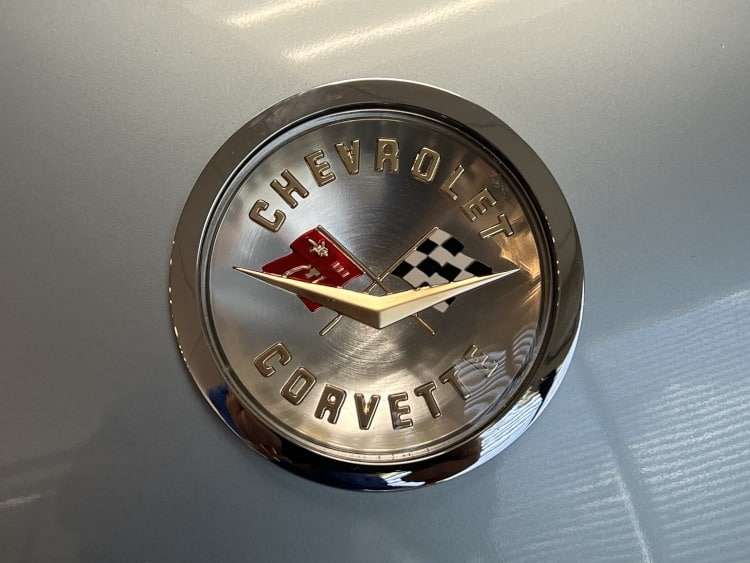
Timeless Beauty – Cherished Legacy
As our time with this magnificent Silver Blue 1958 Corvette comes to a close, we’re reminded that its true value extends far beyond its shiny chrome and impeccable paint.
This car is a rolling time capsule, a keeper of memories, and a tangible link to a pivotal era in automotive design.
It’s a testament to the enduring appeal of the C1 generation, a model year defined by its distinctive quad-headlight design, iconic “washboard hood,” and the innovative 283-cubic-inch V8 that gave it a true sports car spirit.
This isn’t just a car; it’s a piece of American history, a passion project, and a cherished artifact of a golden age.
This 1958 Corvette stands as a shining example of why these classics continue to inspire and captivate enthusiasts, a legacy that will undoubtedly continue for generations to come.
Looking for a Deep Dive?
We recommend, Corvette Generations: A Deep Dive into an American Icon for those wanting to know more about Corvette design philosophy, engineering breakthroughs, and cultural impact that shaped each generation of the Corvette. From fiberglass-bodied beginnings to its modern mid-engine architecture.
Special Thanks – We appreciate Todd Willoughby, owner of American Street Machines Inc, allowing us to photograph this stunning Silver Blue 1958 Corvette at his showroom.
- American Street Machines, Inc
- Address: 5395 Webb Parkway, NW, Lilburn, GA 30047
- Email: Todd@americanstreetmachinesinc – Kelly@americanstreemachinesinc.
- Phone: (770) 427-8388
- Facebook – Instagram
Looking for a Deep Dive?
We recommend, Corvette Generations: A Deep Dive into an American Icon for those wanting to know more about Corvette design philosophy, engineering breakthroughs, and cultural impact that shaped each generation of the Corvette. From fiberglass-bodied beginnings to its modern mid-engine architecture.
Fuel Your Passion: Get Our Best Articles Delivered To Your Inbox – Free
Sign up now to receive every new review, tech guide, and event recap directly to your inbox. It’s fast, free, and easy!
SUBSCRIBE NOW