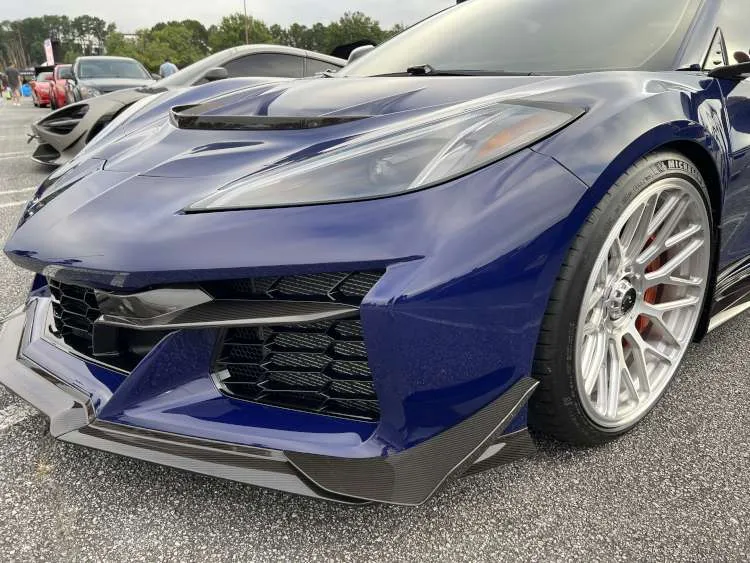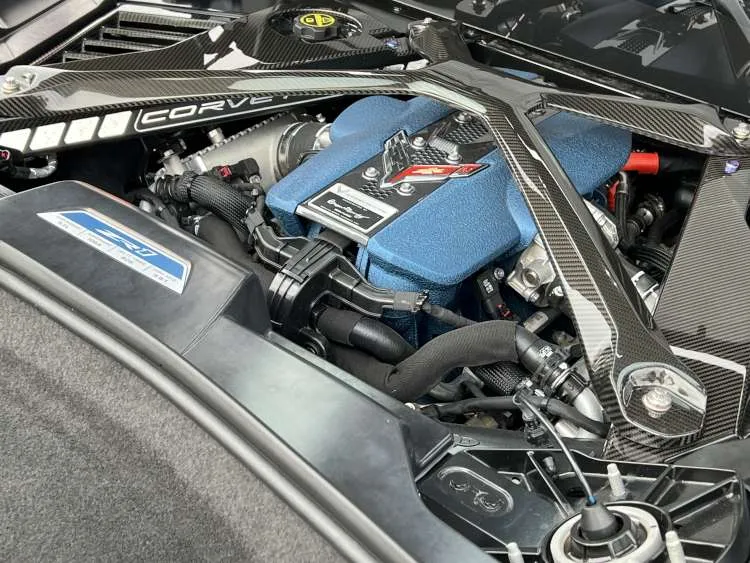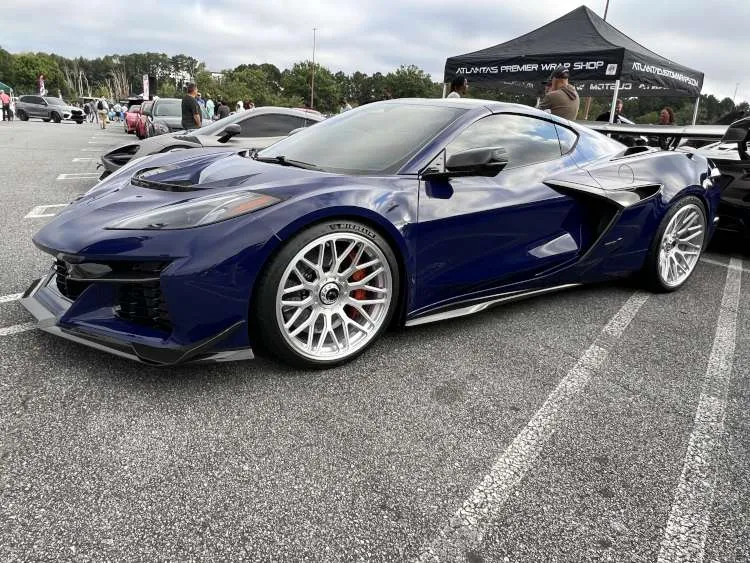


The LS7 V8 engine is a hand-built, naturally aspirated 7.0-liter (427 cubic inch) powerplant that produces 505 horsepower and 470 lb-ft of torque. Renowned for its racing pedigree derived from the Corvette C5-R and C6.R Le Mans programs, it served as the high-performance heart of the C6 Corvette Z06 and fifth-generation Camaro Z/28.
With its unique red engine covers, the LS7 stands as a monument to American performance. This fourth-generation GM Small Block is renowned for its consistent, smooth, and utterly massive power delivery.
When the C6 Z06 was introduced, it wasn’t just another Corvette; it was a bona fide supercar killer, and the LS7 was the reason why.
The engine’s compact, lightweight small-block design was engineered to deliver performance comparable to classic big-block V8s, a notable feat of modern automotive design.
This raw, naturally aspirated force was a statement in an era of increasing complexity. As MotorTrend noted, “With a rated output of 500 SAE net horsepower at 6,200 rpm, the real mechanical energy emanating from this beast far outstrips any of the big-blocks of yore.”
The LS7 proved that smart engineering and brute displacement could create a visceral, raw power that didn’t need a turbocharger or a supercharger to make its point.
And for those curious sixth generation enthusiasts among us, we recommend C6 Corvette Deep Dive: The Return to Simplicity.

Performance & History: A Masterpiece of Raw Power
When the C6 Z06 debuted, it was a bona fide supercar killer, and the LS7 was the sole reason why. Its official numbers—505 hp and 470 lb-ft of torque—defied expectations, proving that a compact, lightweight small-block could deliver big-block performance.
The LS7’s raw, naturally aspirated force was a statement in an era of increasing complexity. As MotorTrend noted, “With a rated output of 500 SAE net horsepower at 6,200 rpm, the real mechanical energy emanating from this beast far outstrips any of the big-blocks of yore.”
The LS7 proved that smart engineering and brute displacement could create a visceral power that didn’t need a turbocharger or a supercharger.
This engine’s foundation is built on racing. Its design was directly derived from the highly successful Corvette Racing team’s C5-R and C6.R Le Mans racing engines. This direct technology transfer is what gives the LS7 its unique feel and capability.
The race-prepared LS7.R was so dominant that in 2006, it was named the “Global Motorsport Engine of the Year.”
Engineer Roger Allen, celebrating the racing variant’s pedigree, stated, “On a personal level, it’s an honor for me as an engineer to have designed engines that have won the Daytona 500, Indianapolis 500, Daytona 24-hour, and the 24 Hours of Le Mans.”

Under the Red Covers: A Look at the LS7’s Core Technology
The LS7 is not just a bigger LS engine; it’s a purpose-built, high-performance machine with a list of unique features that would make any gearhead’s heart beat a little faster.
Lightweight & Durable Internals
The LS7’s robust performance is thanks to its lightweight and durable internal components, a rarity in a production engine.
- The engine block is a unique aluminum casting with large, 4.125-inch diameter bores.
- It features forged steel main bearing caps, which are doweled and cross-bolted for maximum strength.
- The connecting rods are forged titanium, weighing 30% less than the rods in the LS2 V8.
- The forged 4140 steel crankshaft is precision-balanced to handle a 7,000-rpm redline.
When you tear down an LS7, you immediately see the difference. The titanium connecting rods, for example, are a piece of mechanical art—a feature normally reserved for top-tier racing engines.
This attention to detail allows the engine to rev so high and so fast, making it feel incredibly responsive as it climbs through the rev range.
The Masterpiece: CNC-Ported Cylinder Heads
The LS7’s massive displacement would be meaningless without the ability to breathe, and its cylinder heads are where the magic happens.
- The cylinder heads are all-new, racing-derived, CNC-ported aluminum castings with a 70-cc combustion chamber.
- They feature huge, 56-mm titanium intake valves and 41-mm sodium-filled exhaust valves.
- Intake runners are straight and tunnel-like, designed to maintain high airflow velocity for excellent low-end torque and high-end horsepower.
These aren’t just “ported” heads; they’re the result of meticulous computer-aided machining—a level of precision almost unheard of in a mass-produced engine at the time.
The racing heritage is most obvious here, where every port, angle, and chamber was engineered for one purpose: to make the most horsepower possible, naturally aspirated.
Dry-Sump Oiling System: The Lifeblood of a Racer
A critical feature for any track-focused car is its ability to handle high-G cornering, and the LS7’s dry-sump system was a direct answer to that need.
- The system uses an 8-quart reservoir to store oil separate from the oil pan.
- An electric scavenge pump returns oil to the reservoir, preventing oil starvation during high-load cornering.
- The system also features a high-efficiency air-to-oil cooler to keep engine temperatures in check.
For the serious track day enthusiast, a dry-sump system is non-negotiable. Without it, hard cornering can slosh oil away from the pickup tube, starving the engine of lubrication.
The LS7’s system was developed and tested on legendary tracks like Germany’s Nürburgring, proving that GM was serious about making the Corvette Z06 a true, track-ready supercar.

The Human Touch: Hand-Built for Performance
In an era of assembly lines and robotic automation, the LS7 stands as a testament to the power of human craftsmanship.
Every single LS7 engine was hand-assembled by a single, specially-trained builder at GM’s Performance Build Center in Wixom, Michigan. The process used precision machining like deck plate honing to ensure perfectly round cylinder bores and optimal ring sealing.
After assembly, each engine was balanced and subjected to a 20-minute heat test.
This is a detail that always resonates with enthusiasts. The idea that a single person, a master craftsman, built your engine from start to finish is truly special.
For owners who opted for the Performance Build Center (PBC) option when ordering a Corvette Z06, the engine builder’s signature is documented in the following ways:
- Build Sheet: The LS7’s factory paperwork, or build sheet, notes the name of the GM technician who assembled the engine.
- Photo: At the completion of the engine build, a picture is taken of the technician with the finished engine. The photo is then put on the wall at the PBC and a copy is provided to the customer for documentation

The Elephant in the Room: LS7’s Notorious Flaw
While the LS7 is a marvel of engineering, its reputation is complicated by one well-documented, serious issue that every potential owner must be aware of.
The Dreaded “Dropped Valve”
The most serious issue with the LS7 is its propensity for a catastrophic “dropped valve.” This is where the head of an exhaust valve separates from its stem, falls into the cylinder, and instantly destroys the engine.
The root cause is a manufacturing flaw on the original cylinder heads, which can cause the valve guides to be non-concentric with the valve seats. This leads to premature, excessive wear, a problem that affects stock, unmodified engines as well as high-performance builds.
For years, this issue has been a source of anxiety for many owners, creating a unique paradox: immense satisfaction from the engine’s incredible power combined with a nagging worry about potential failure.
While the “wiggle test” was once a popular diagnostic method, it has been widely discredited. We suggest the only surefire way to prevent this failure is a professional inspection and potential rebuild of the cylinder heads.
LS7 Preventative Maintenance Checklist
To truly enjoy the LS7 without fear, a proactive approach to maintenance is essential. This information is for guidance only, and it’s always best to consult a specialized mechanic or engine builder.
Frequent Interval (Every 3,000–5,000 Miles)
- Engine oil and filter change: The LS7’s dry-sump system holds a significant 10.5 quarts of oil. Use a high-quality 5W-30 synthetic oil.
- Check all fluid levels: Inspect coolant, brake fluid, and power steering fluid.
- Visual inspection: Look for any signs of fluid leaks around the engine, hoses, and dry-sump system.
Intermediate Interval (Every 15,000–30,000 Miles)
- Valvetrain inspection (critical for LS7): Have an engine builder inspect the valve guides for excessive wear. Many owners preemptively replace the factory guides and valves to prevent failure.
- Engine air filter replacement: A clean filter is crucial for optimal performance.
Long-Term Interval (Every 50,000–75,000 Miles)
- Replace spark plugs and wires: Replace them according to the factory schedule or sooner with hard driving.
- Drain and refill engine coolant: The LS7 uses DEX-COOL, but a periodic flush is a good practice.
- Fuel filter replacement: Maintain fuel system health by replacing the fuel filter.
Other Critical Checks
- Catch can installation: Consider a quality catch can to prevent oil vapors from fouling the intake manifold.
- High-performance use: If the engine is used on a track, fluid changes and inspections should be performed more frequently.
- Monitor for engine noise: Always listen for any unusual tapping or clicking from the valvetrain, which could indicate valve guide wear.

LS7 vs. The World: A Tale of Two Philosophies
How does the LS7 stack up against its contemporaries? It’s a classic battle of old-school brute force versus new-school technology.
LS7 vs. LS3: The Ultimate Debate
When people talk about GM performance V8s, the conversation inevitably turns to the LS7 vs. LS3 debate.
| Feature | LS7 | LS3 |
| Pros | Higher horsepower and torque output, superior performance, racing pedigree, titanium connecting rods. | More affordable, better reliability record, more relaxed ownership experience. |
| Cons | More expensive to purchase and maintain, known valve guide issue, higher risk of catastrophic failure. | Lower power output, less exotic components. |
In essence, the LS7 is the high-strung, race-bred version of the GM small block. It’s the engine for the purist who values raw, naturally aspirated performance above all else.
The LS3, on the other hand, is the more well-rounded, street-friendly option. It offers a fantastic blend of power and reliability at a more approachable price point.
If you want the ultimate naturally aspirated performance, the LS7 is the clear choice. If you want a trouble-free ownership experience and the potential for easy forced induction, the LS3 wins.
LS7 vs. Other Naturally Aspirated V8s
The LS7’s true distinction becomes clear when you compare it to rivals from other manufacturers.
| Feature | GM LS7 (Gen IV) | Ford 5.0L Coyote (Gen 1-2) | Chevrolet LT1 (Gen V) | SRT 392 Hemi (Gen III) |
| Engine Layout | Pushrod, 2 valves per cylinder. | DOHC, 4 valves per cylinder. | Pushrod, 2 valves per cylinder, direct injection. | Pushrod, hemispherical chambers. |
| Displacement | 7.0L (427 cu. in.) | 5.0L (302 cu. in.) | 6.2L (376 cu. in.) | 6.4L (392 cu. in.) |
| Performance | 505 hp / 470 lb-ft | 412-435 hp / 390-400 lb-ft | 455-460 hp / 455-465 lb-ft | 475 hp / 470 lb-ft |
| Power Delivery | Massive low-end torque. | High-revving, top-end power. | Modern blend of torque and efficiency. | Great torque, heavy package. |
The LS7’s strength is its displacement and pushrod design. It might not rev as high as a DOHC engine like the Coyote, but its raw, low-end grunt is what makes it so much fun.
It provides immense, accessible power throughout the entire rev range, a feeling that forced-induction engines can’t quite replicate. And if you’ve ever faced one at a dragstrip, you’ll quickly find out how formabile this powerplat can be.
Also, the LS7’s compact pushrod design makes it a popular choice for engine swaps where space is a premium, unlike the physically larger DOHC and Hemi engines.
Perhaps the best quote about the LS powerplant we’ve read comes from engine builder, Luke Siebert from Siebert Performance when he said, “To me, that was the contributing factor for the LS being so popular. It took the best of what we know as far as airflow and valvetrain characteristics from small block engines and aftermarket race stuff and incorporated it in a good beginning platform to start with”

Buying an LS7: Cost, Risks, and Solutions
For those considering an LS7, it’s not a decision to be taken lightly. You must go in with your eyes wide open and a realistic budget.
What to Budget for: Purchase & Repairs
The cost of a new or used LS7 can vary dramatically depending on its condition and history.
| Purchase Type | Cost Estimate | Details |
| Used Dropout | $12,500–$16,000 | Cheapest option, but almost certainly has the unresolved valve guide issue. |
| Chevrolet Performance Crate | $18,200 | A brand-new crate engine from GM. Some new crate engines still had the valve guide issue. |
| Aftermarket Crate (high-performance) | $30,000+ | High-end builders offer boosted or high-displacement LS7s, with prices starting from over $30,000. |
In addition to the purchase price, you must budget for the most critical repair: the valve guide defect.
An inspection and possible cylinder head repair can cost anywhere from $2,300 to $6,700+. If the engine has a catastrophic failure, a complete rebuild or replacement could easily exceed $10,000.
A Proactive Approach: Essential Preventative Maintenance
To truly enjoy the LS7, a proactive approach is necessary.
- Mandatory Inspection: Assume any used LS7 needs the heads inspected and repaired. This is not optional.
- Professional Repair: The only definitive way to check is to remove the heads and have them professionally inspected and, if necessary, repaired by a specialist like American Heritage Performance or Katech.
- Upgraded Components: Many owners choose to replace the factory valve guides with high-quality aftermarket ones. Some go a step further and replace the entire cylinder heads.
While the LS7 is a sensational engine, it’s not a “bolt-in and go” solution. To own one and drive it with confidence, you must be prepared to address its one major flaw.
The good news is that the aftermarket has created a variety of well-known and reliable solutions to fix the problem and provide the peace of mind needed to truly enjoy the engine’s incredible performance.
Frequently Asked Questions: The LS7 V8 Engine
Core Reliability Concerns
- Is the LS7’s “dropped valve” a real problem? Yes, it is a very real and well-documented issue. A manufacturing flaw in the original cylinder heads can cause excessive valve guide wear, which can lead to the valve head separating from its stem and dropping into the cylinder, causing catastrophic engine failure.
- What is the cause of the dropped valve? The root cause is a factory flaw in the cylinder heads that results in non-concentric valve guides. This manufacturing defect leads to premature wear on both low-mileage and modified engines.
- How can the valve guide issue be fixed? The most common and recommended fix is to have the cylinder heads professionally repaired by a reputable engine builder. This involves replacing the factory valve guides with higher-quality bronze guides and performing a proper valve job.
- Is the LS7 a reliable engine? The LS7 does not have the same reputation for “bulletproof” reliability as other LS engines, such as the LS3, due to the number of failures related to the valve guide issue.
Performance and Ownership
- Is the LS7 a good daily driver? While it can be daily driven, its high-performance nature and known valve guide issue mean it requires more diligent and specialized maintenance than other engines.
- What is the “best” LS engine: the LS7 or LS3? The debate between the two often comes down to personal preference. The LS7 offers superior, race-proven performance, while the LS3 is a more affordable and reliable choice with a better track record for durability.
- Is it expensive to fix? Yes. Costs can range from a few thousand dollars for a preventative cylinder head rebuild to over ten thousand for a complete engine replacement if a valve drops.
Dry-Sump Oiling System
- What is the LS7’s dry-sump system? The dry-sump system uses a separate oil reservoir to prevent oil starvation during high-G cornering on a racetrack. It is a high-performance feature derived from racing.
- How do you check the oil level on a dry-sump LS7? The procedure is specific and time-sensitive. You must check the oil within 5 to 15 minutes of shutting down a fully warmed-up engine to get an accurate reading.
- Do LS7s burn oil? Like many high-performance engines, the LS7 is known to consume some oil. The dry-sump system adds complexity, so owners must regularly monitor their oil levels.

A Legacy of Power: The LS7’s Enduring Appeal
Despite its known flaw, the LS7’s legacy as one of GM’s most powerful and iconic naturally aspirated small-block V8s is secure. It’s an engine that represents a bygone era of pure, unfiltered performance, a time when displacement was king and raw power was celebrated.
The LS7’s racing pedigree is exemplified by its performance in the 2001 24 Hours of Daytona race. A Katech-built LS7 C5.R powertrain propelled the race-winning Corvette to a 1-2 finish in the GTS class.
This victory demonstrated the durability and performance of the LS7 architecture in endurance racing, solidifying its legacy as a true performance engine.
It really just sums up the racing pedigree of this hand-built engine and its true craftsmanship. That brutal 24 hour performance enshrined the LS7 a place in Corvette history.
For the true enthusiast, the LS7 isn’t just an engine; it’s a living legend—a beast with a flaw, yes, but a beast nonetheless.
Looking For a Deep Dive?
We recommend, Corvette Generations: A Deep Dive into an American Icon for those wanting to know more about Corvette design philosophy, engineering breakthroughs, and cultural impact that shaped each generation of the Corvette. From fiberglass-bodied beginnings to its modern mid-engine architecture.
Fuel Your Passion: Get Our Best Articles Delivered To Your Inbox – Free
Sign up now to receive every new review, tech guide, and event recap directly to your inbox. It’s fast, free, and easy!
SUBSCRIBE NOW